
ONLINE SOLO EXHIBITION · 2023 · REVISITED 2026
Ali Miranda
Beyond Photography and Homoculture
Curated by William Riera · South Florida Latin American Photography Forum (SoFLaFoto)
INTRODUCTION
This exhibition is based on the online solo show SoFLaFoto curated for Ali Miranda in 2023, which went offline when its platform closed. This revisit rebuilds it and puts at its centre what the photographs most plainly are: a celebration of a community that cast itself as its own stars, made by a photographer who belonged to it.
THE EXHIBITION IN SIX SECTIONS
01 · South Beach Drag Queen Scene — the city by day, 1990s
02 · Starlettes are saying: “Don’t say sandwich to me!” — the city in print, 1990s
03 · Miami Gay Scene — the city at night
04 · Male Erotica — the studio, 1990
05 · Carni-val — the studio, 1990
06 · Eros of Dreams — the studio, 1993
Curatorial essay · The artist · About this exhibition
This exhibition contains nudity, particularly in sections 04–06.
01 · THE CITY BY DAY
South Beach Drag Queen Scene
1990s
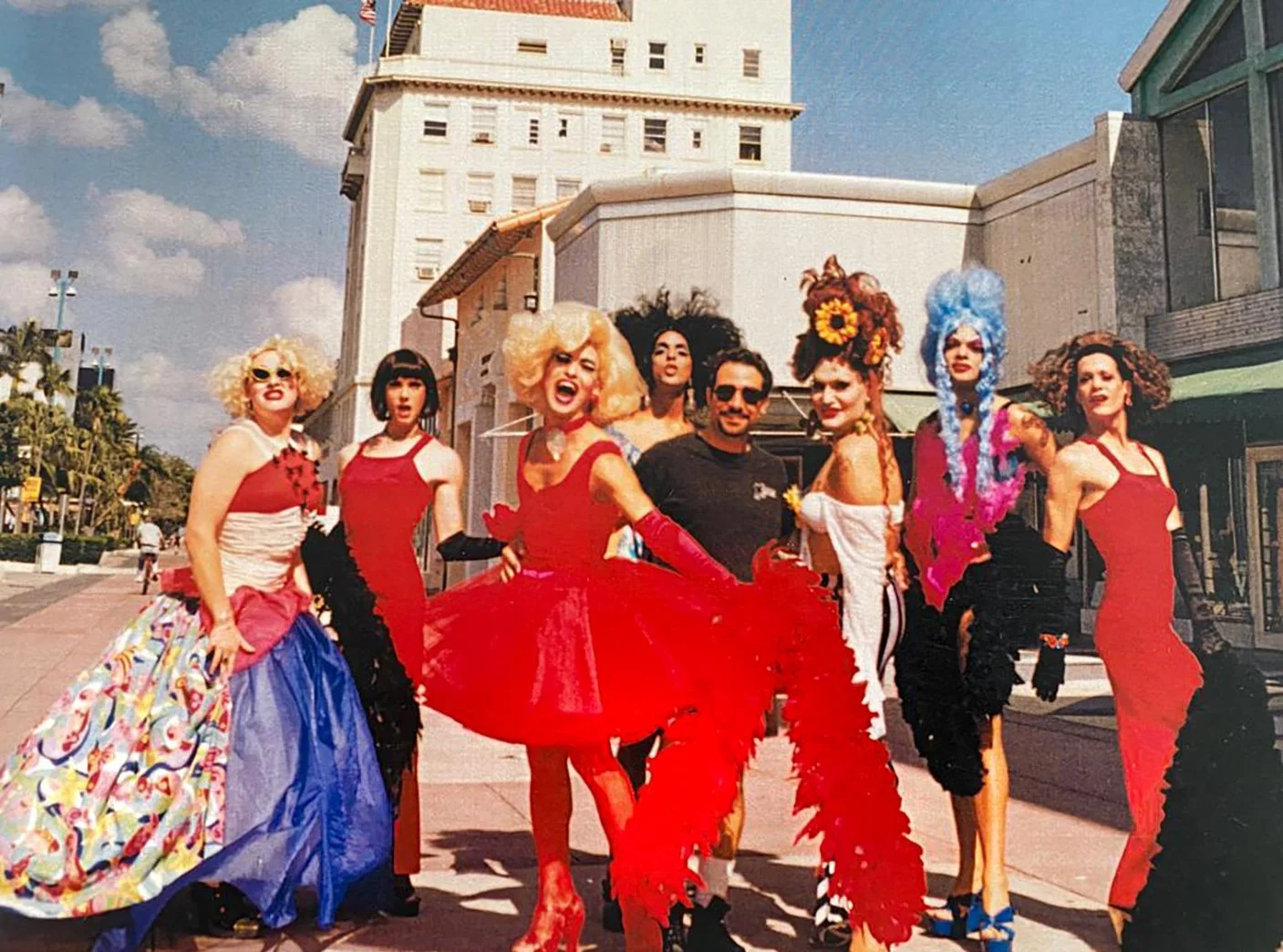
Midday on South Beach, and the queens have taken the street. Feathers, sequins and heels against pastel façades: they crowd a pink pylon, climb a lifeguard stand, rise in plumes from a fountain. Nothing here is caught by chance. Every pose is chosen, and the city becomes the stage on which they decide how they will be remembered.
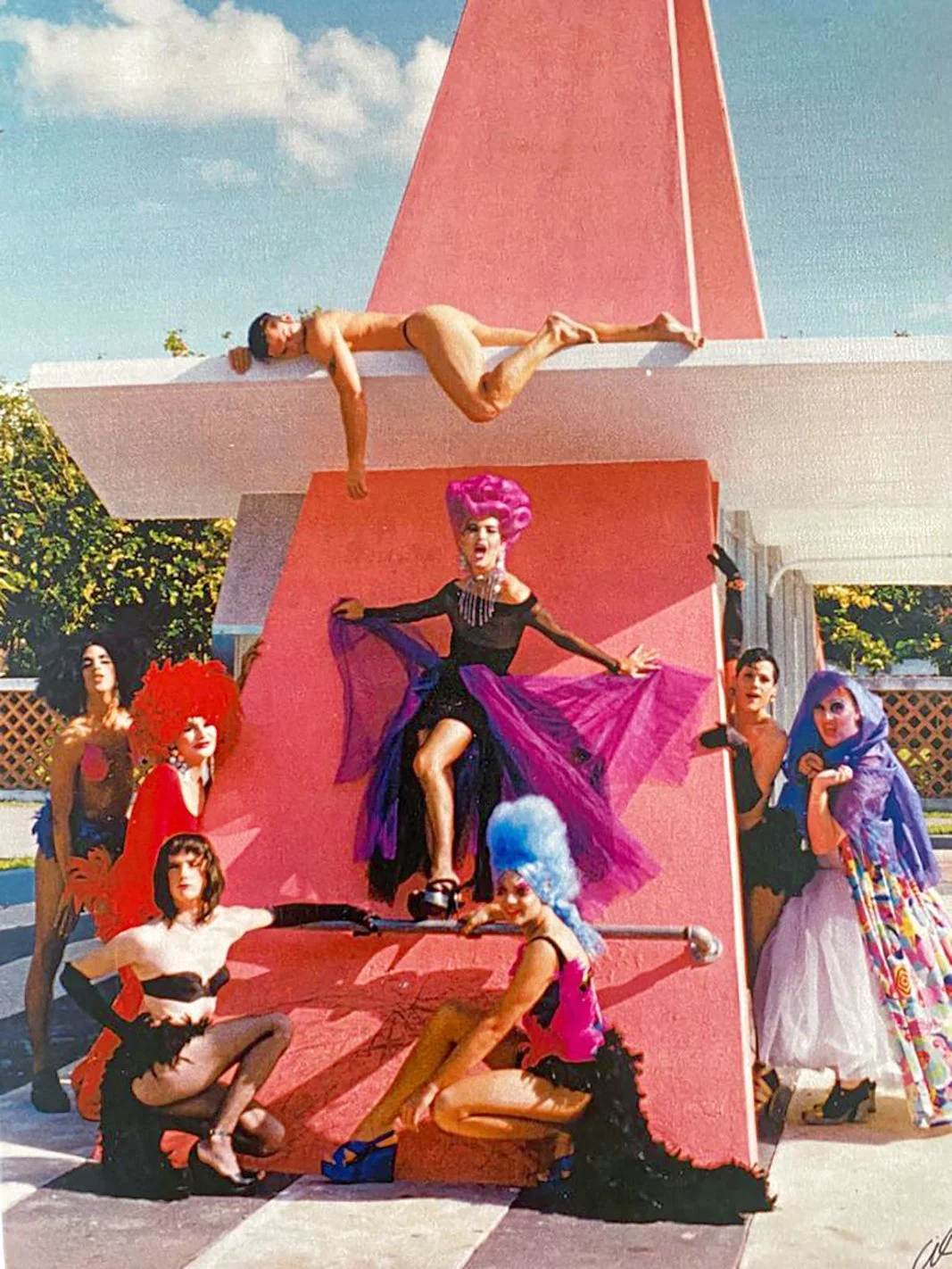
Group at the pink pylon, 1990s
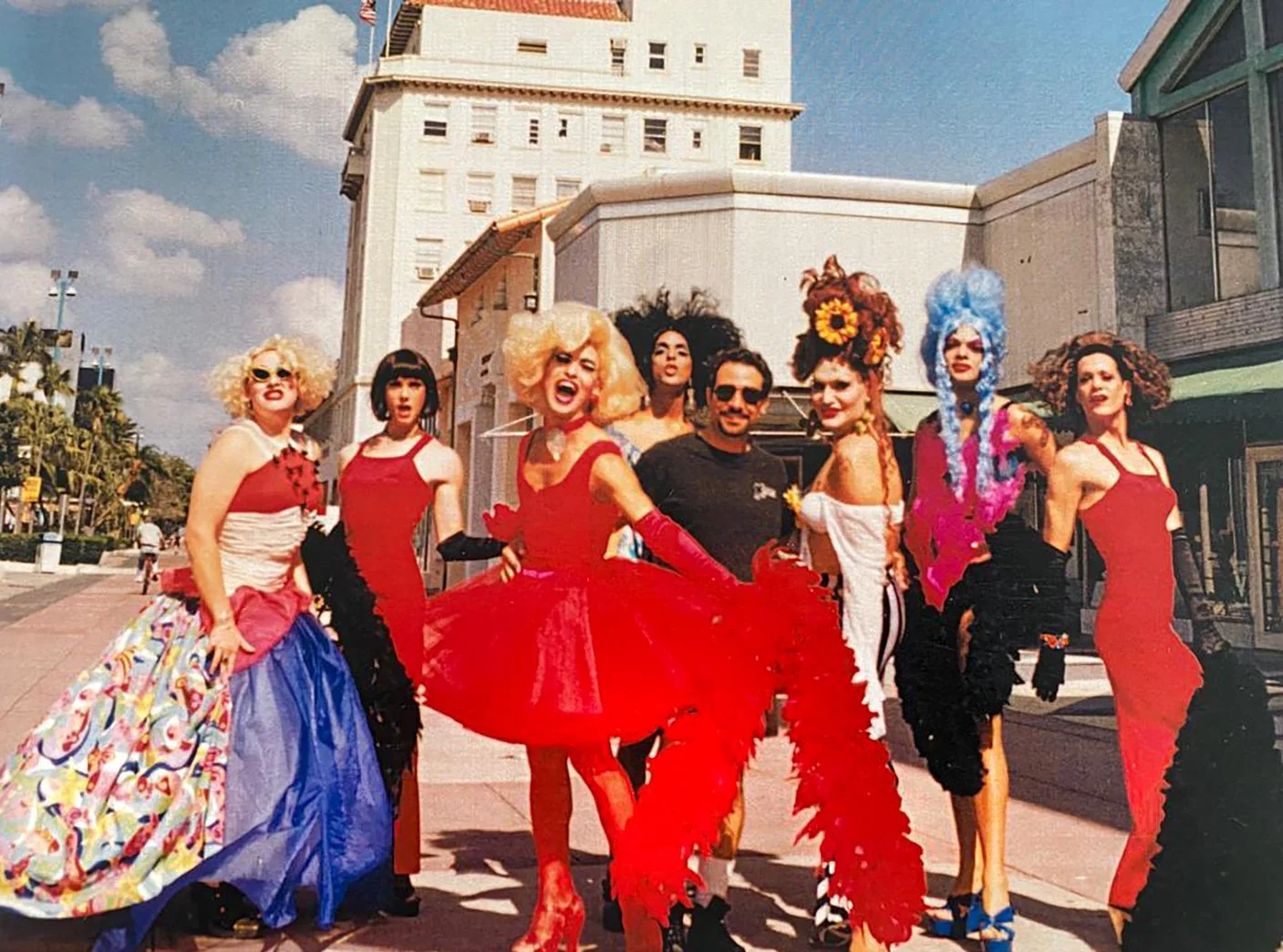
Group on the street, 1990s
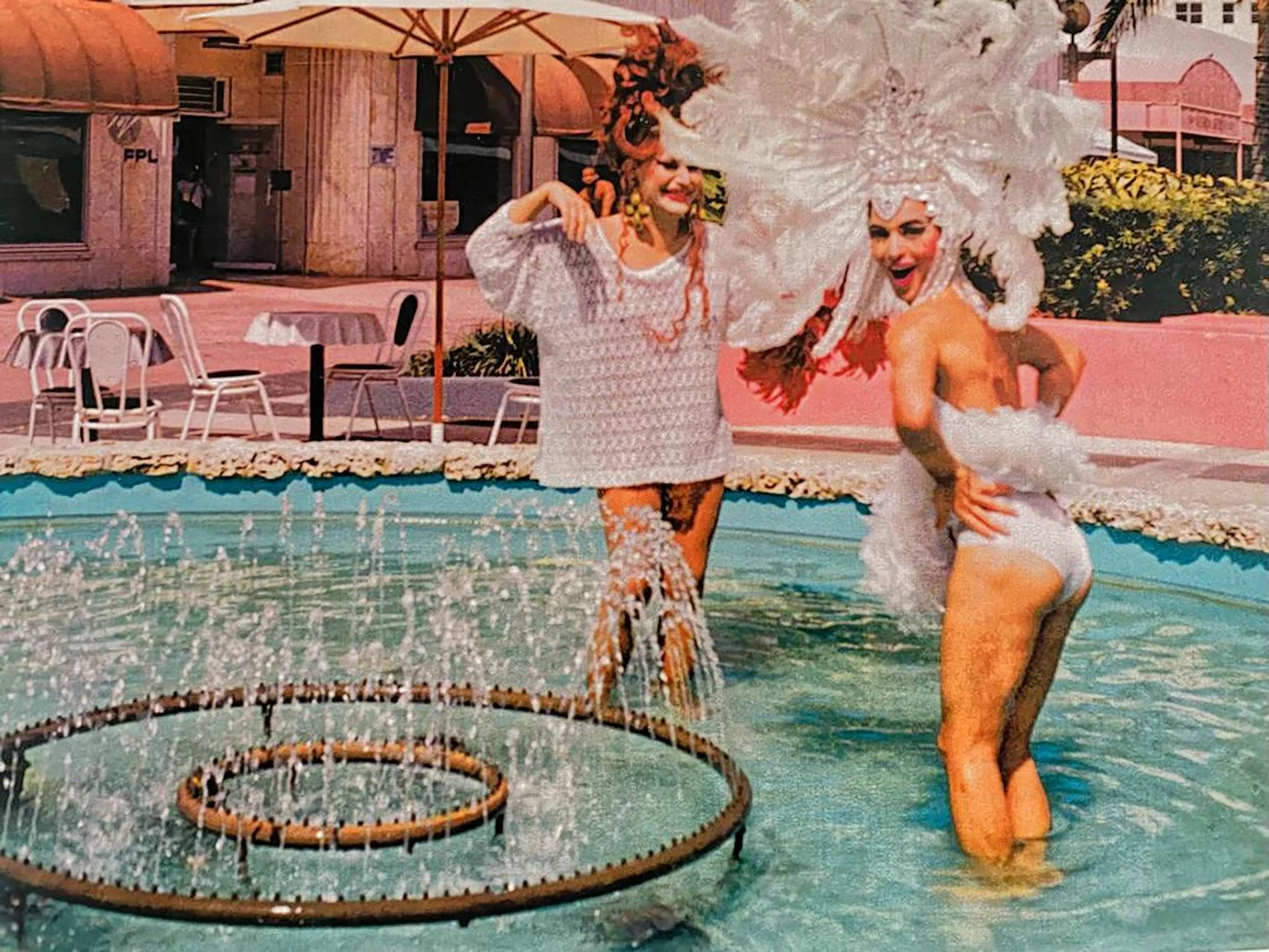
Two performers in a fountain, 1990s
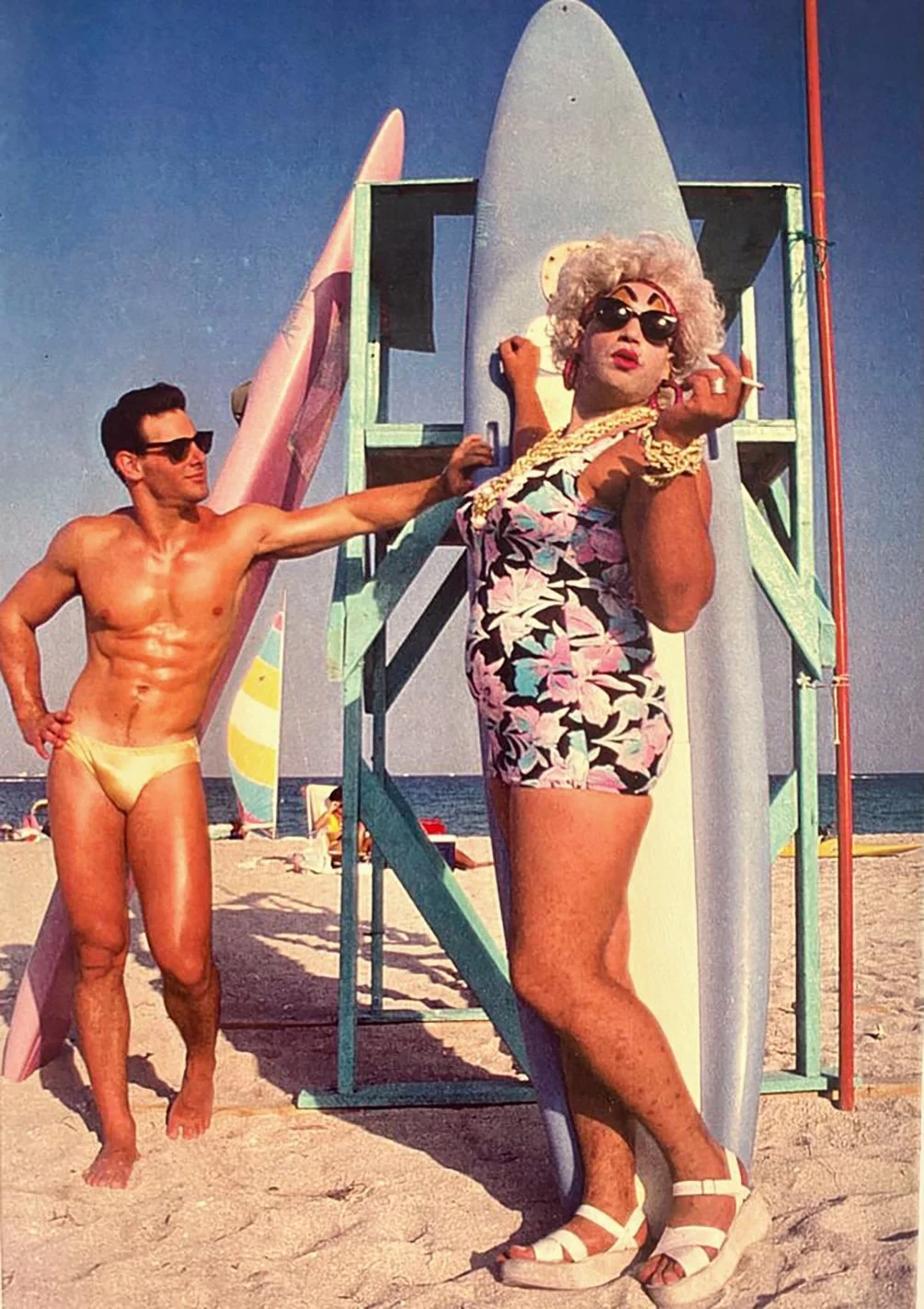
At the lifeguard stand, 1990s
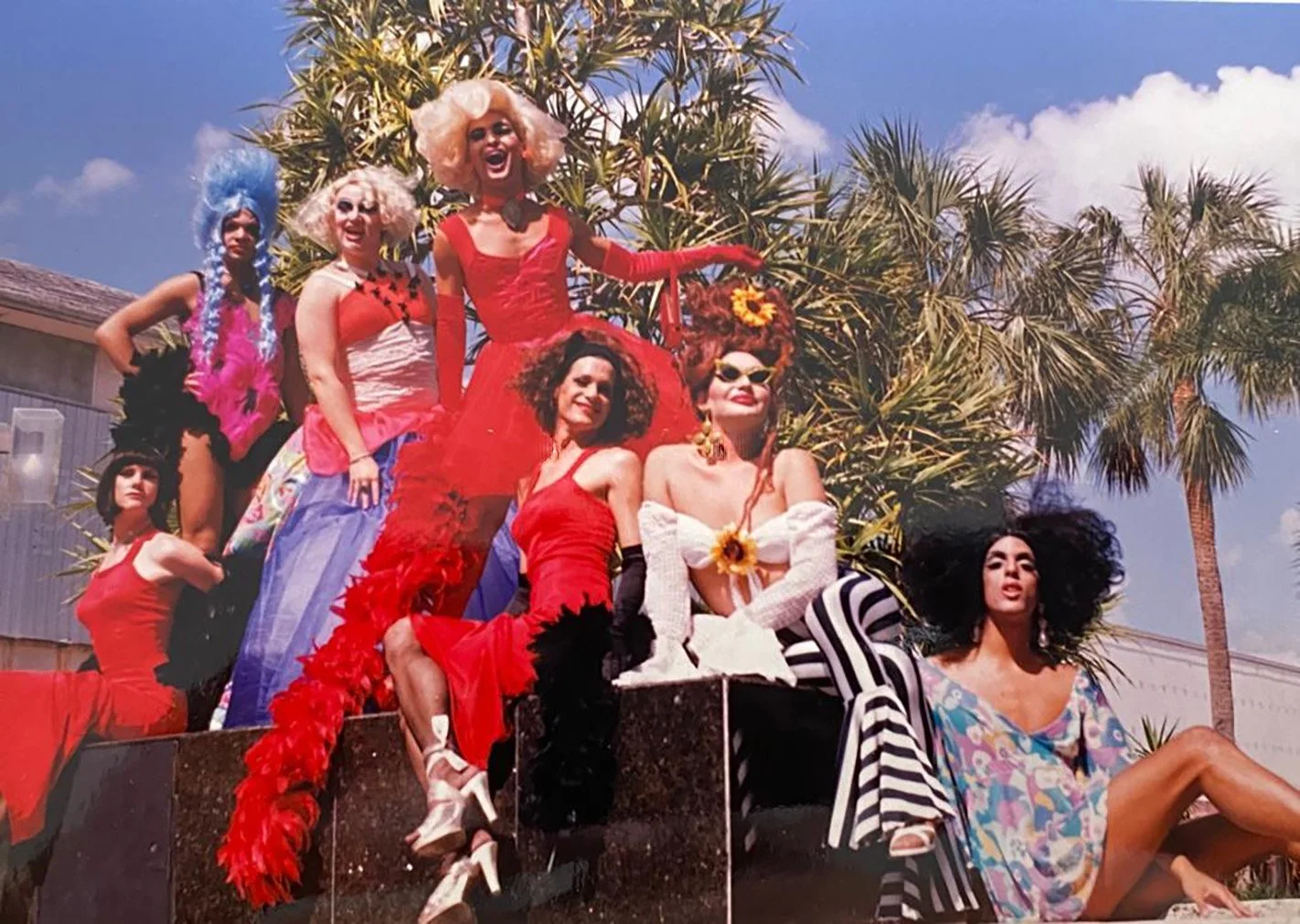
Group under palms, 1990s
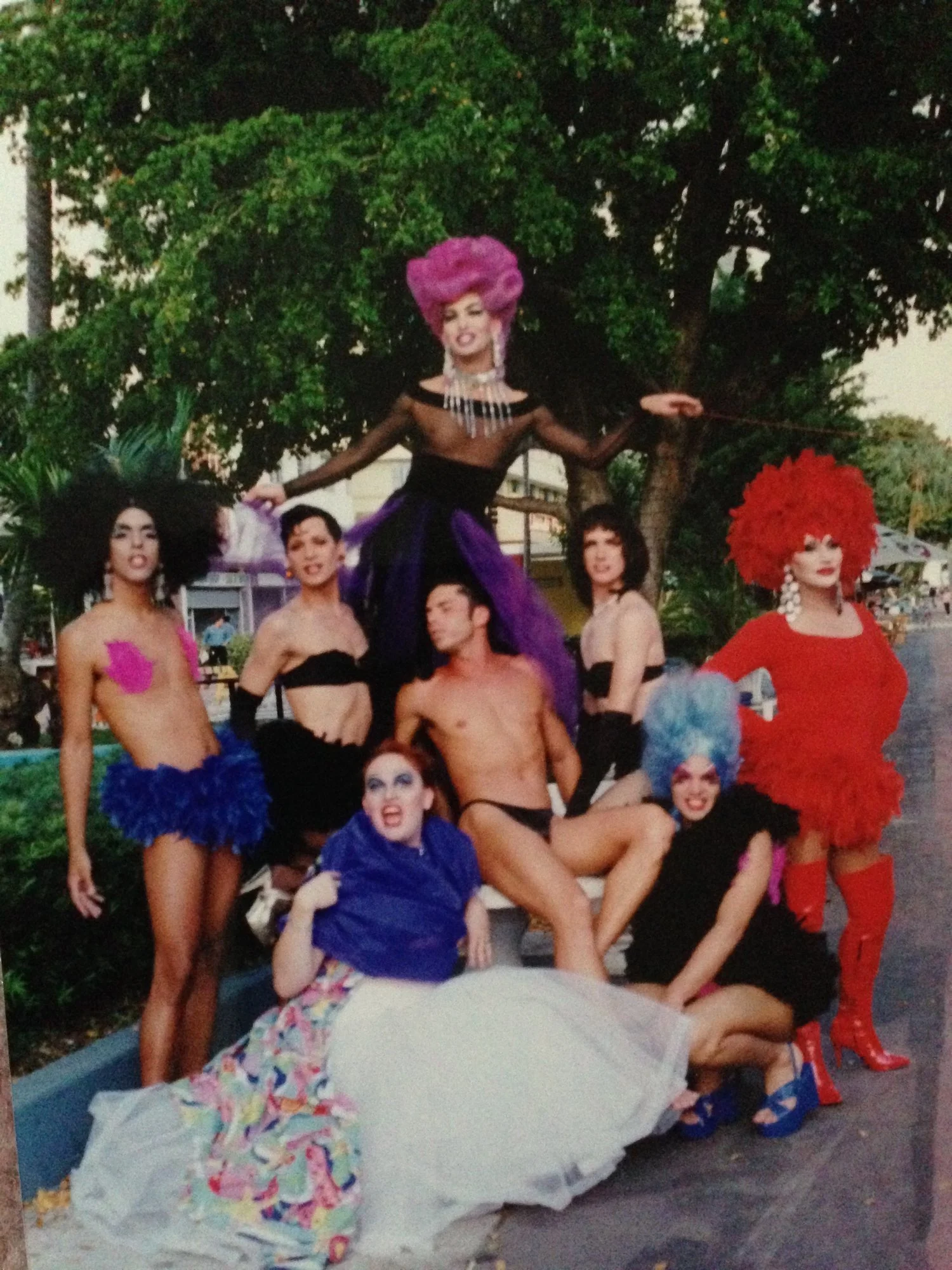
Group under trees, 1990s
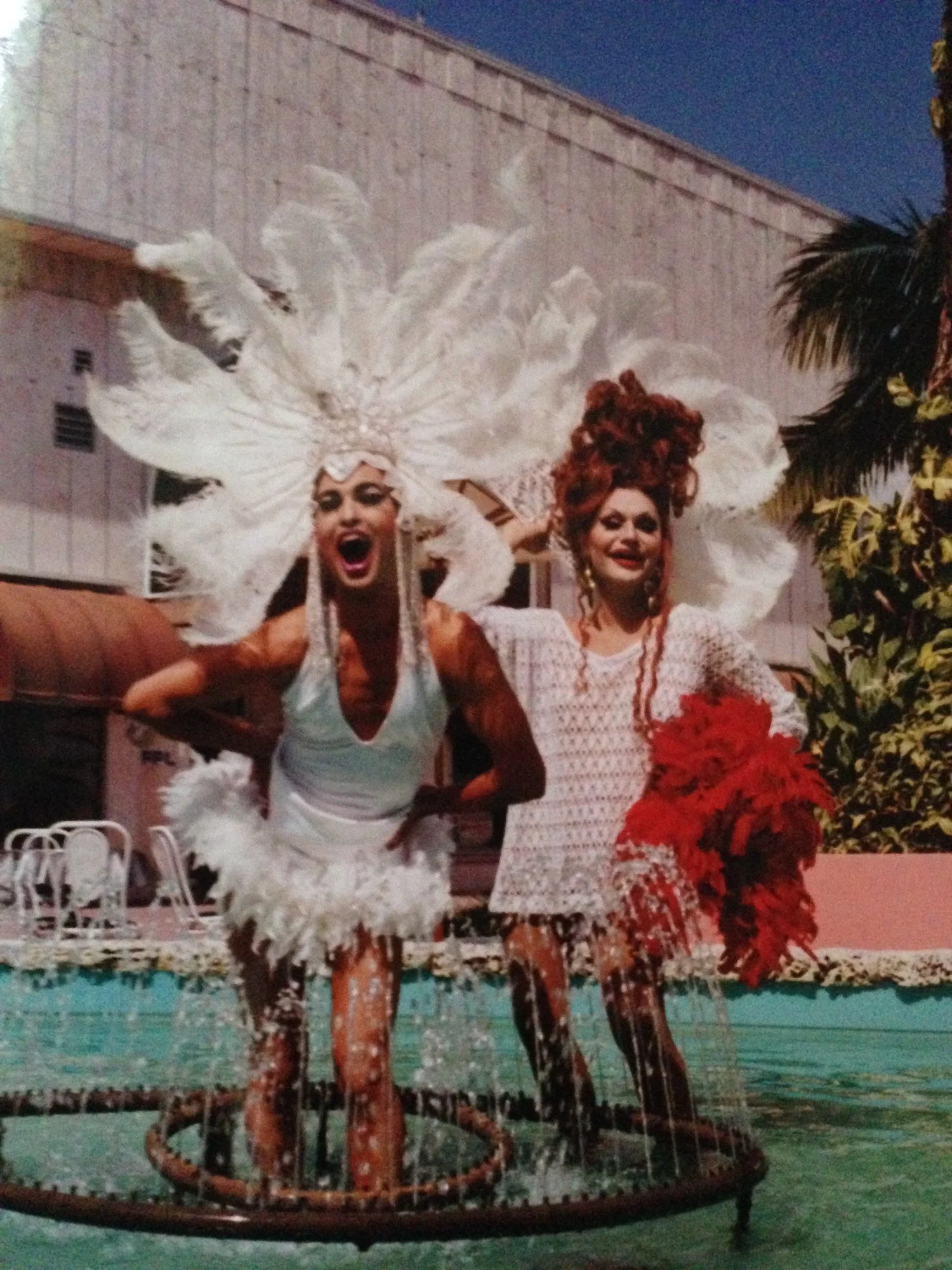
Fountain, two performers, 1990s
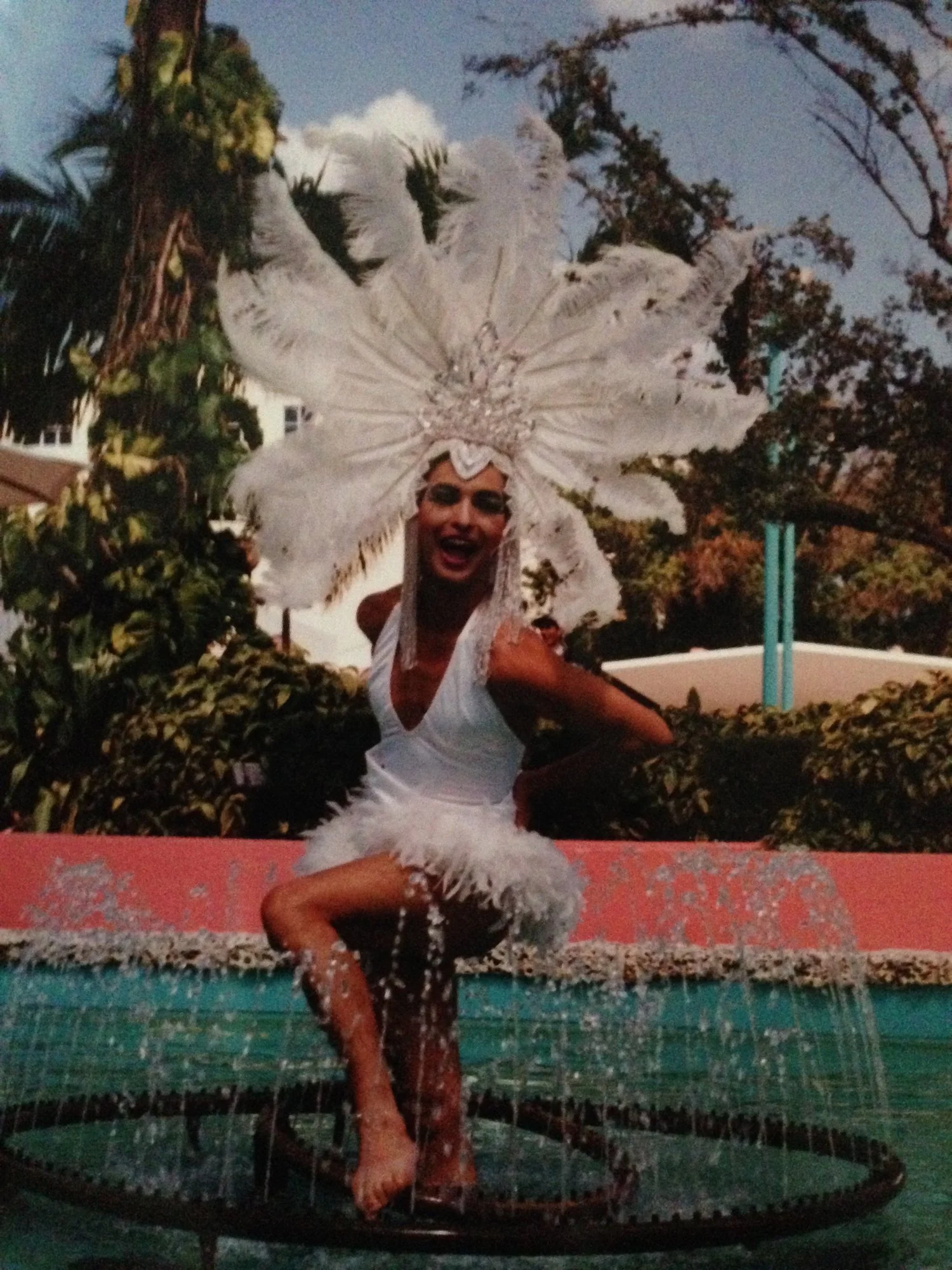
Fountain, one performer, 1990s
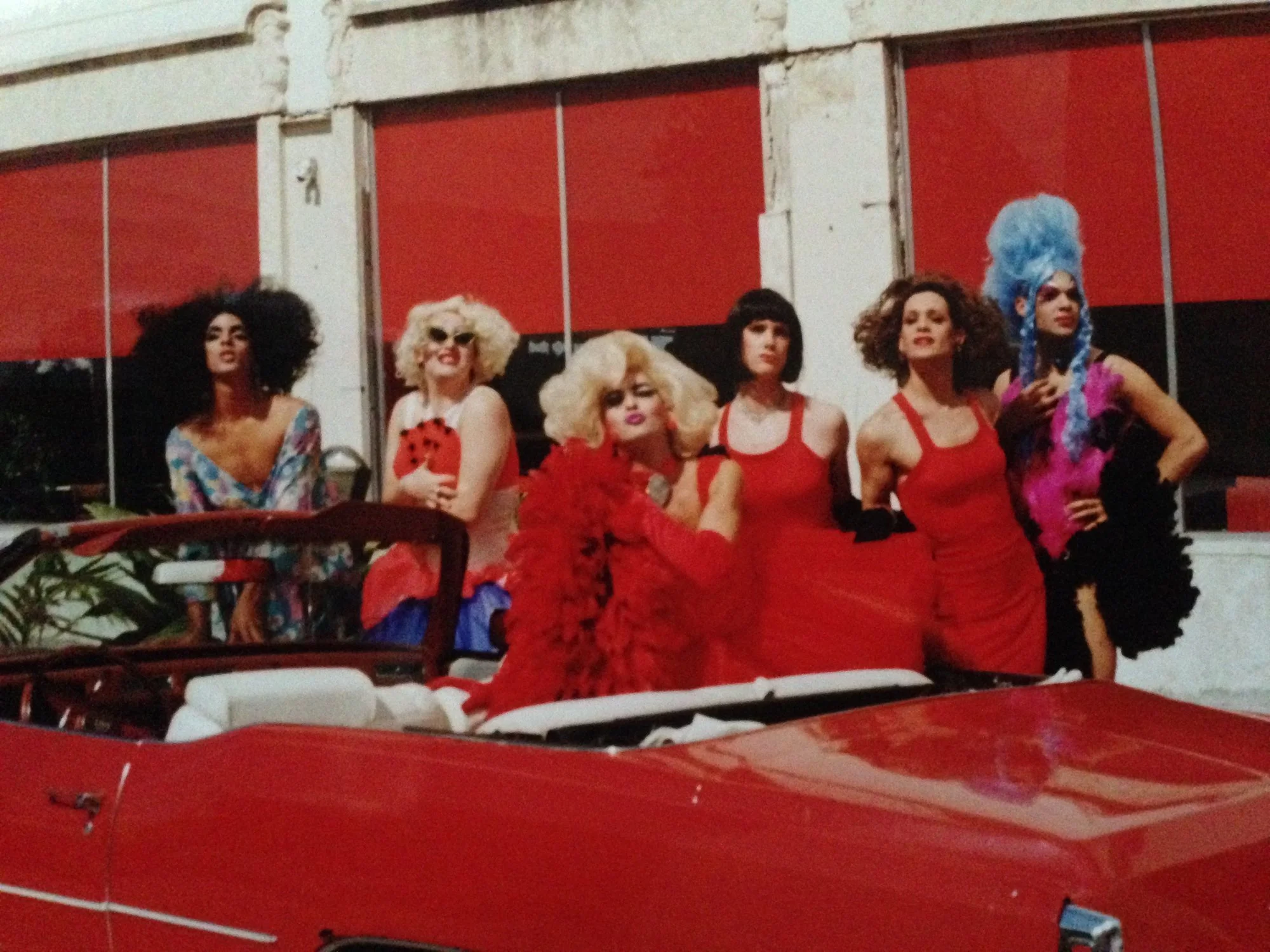
Red convertible, 1990s
02 · THE CITY IN PRINT
Starlettes are saying: “Don’t say sandwich to me!”
1990s · menu covers, portraits, poster
Every menu opened on a queen. At Don’t Say Sandwich To Me, John Kroll’s restaurant on Washington Avenue at 14th Street, open around the clock as Ali remembers it, the menus were Ali’s own design. Varla, Adora, Divina, Kittie Meow and their sisters filled the covers, framed in gold stars on glossy yellow and billed like headliners. His portraits left the studio and passed through the hands of everyone who came in from the night, and the names travelled across Miami Beach with them.
Menus and portraits by Ali Miranda. Paired as diptychs by SoFLaFoto for the 2023 exhibition.
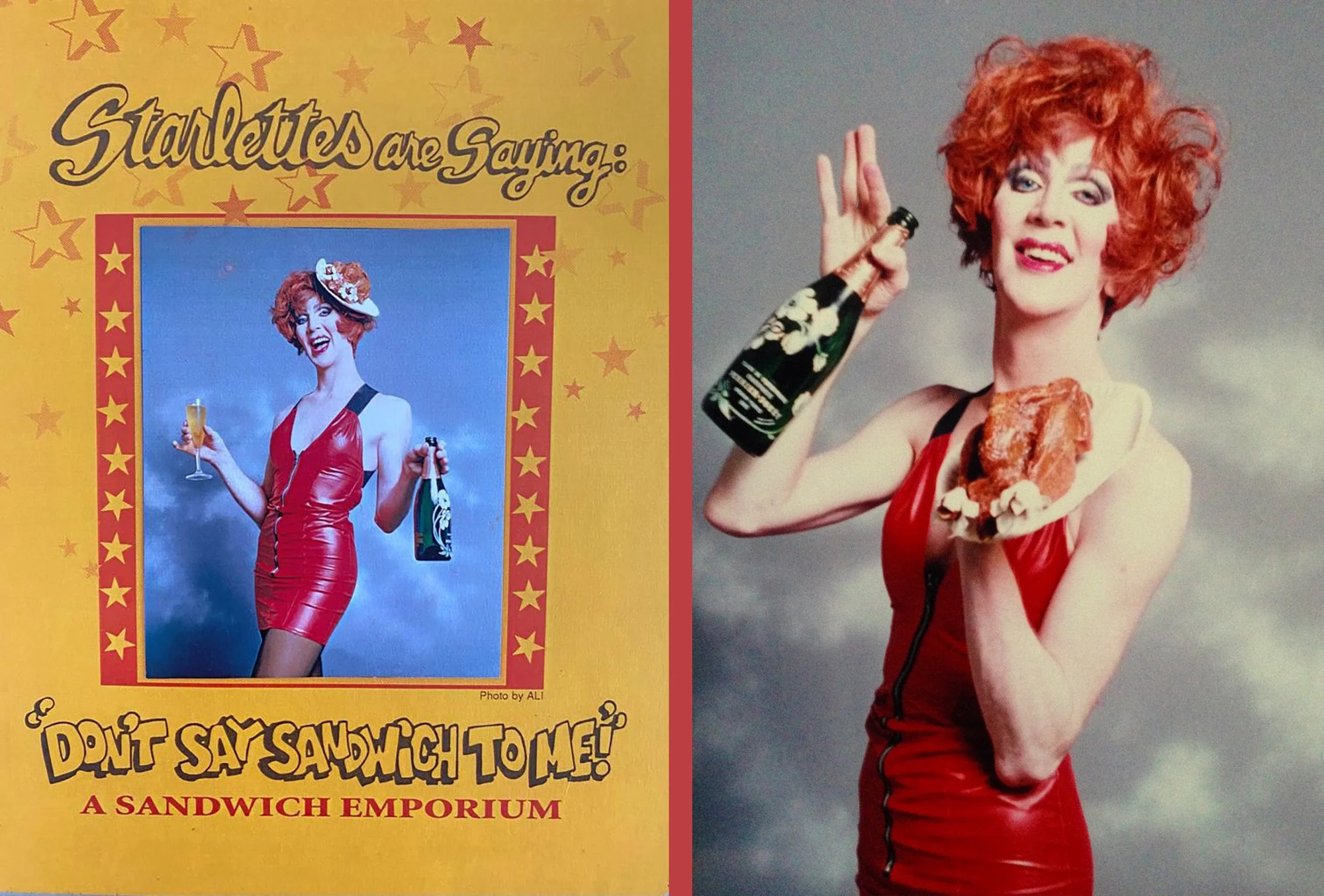
Patty Cakes, menu and portrait, 1990s (diptych by SoFLaFoto, 2023)
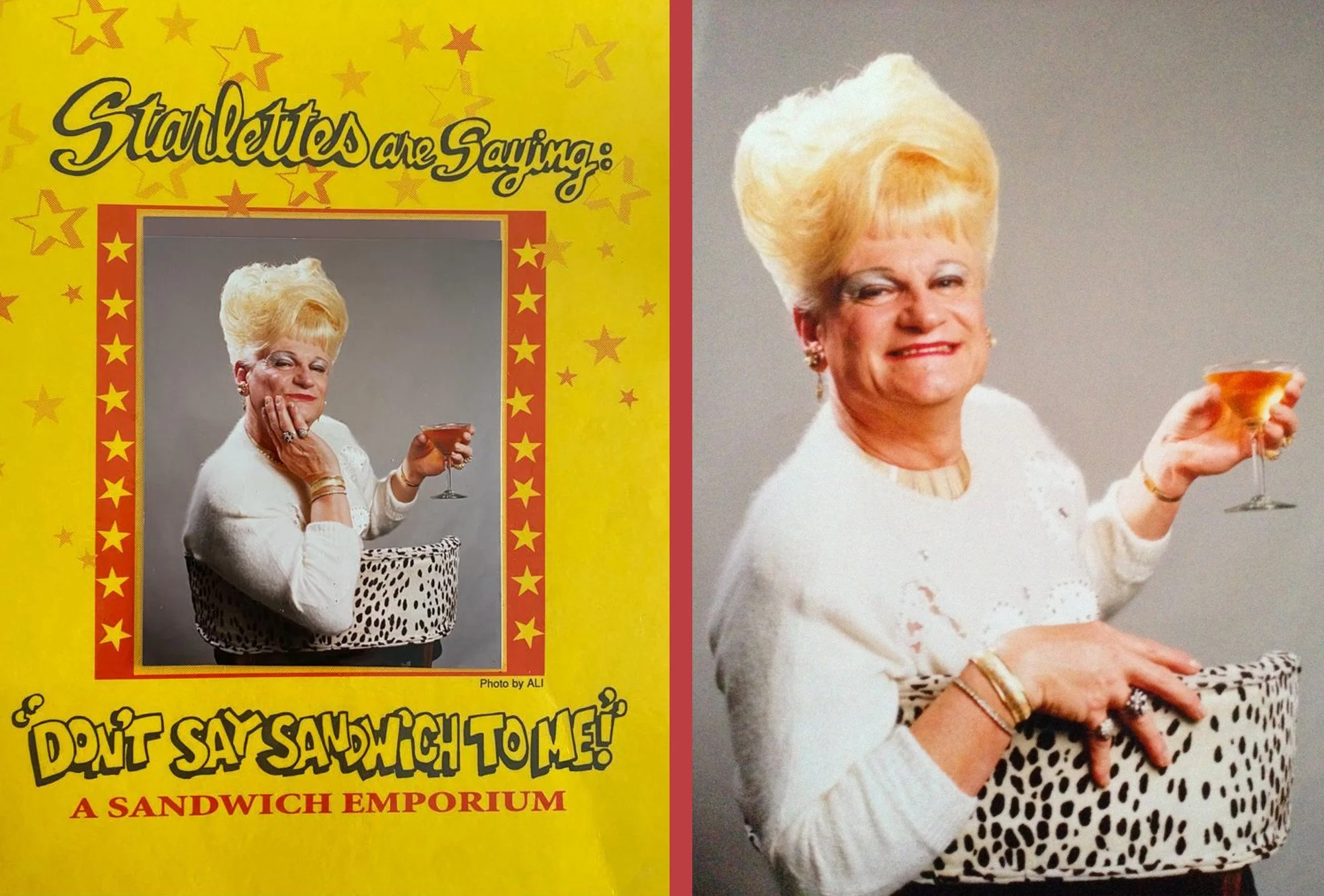
Henrietta Robinson, menu and portrait, 1990s (diptych by SoFLaFoto, 2023)
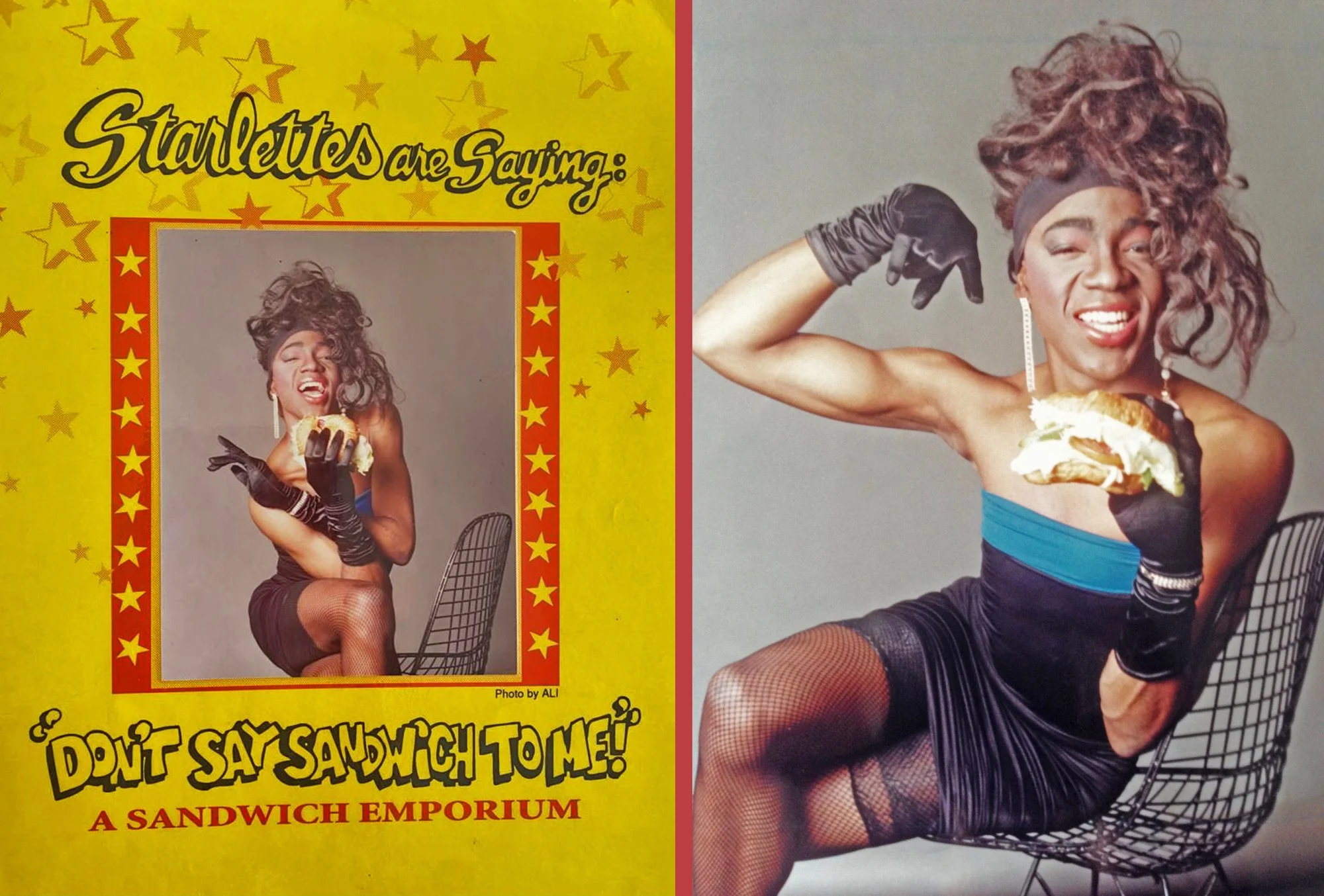
Kittie Meow, menu and portrait, 1990s (diptych by SoFLaFoto, 2023)
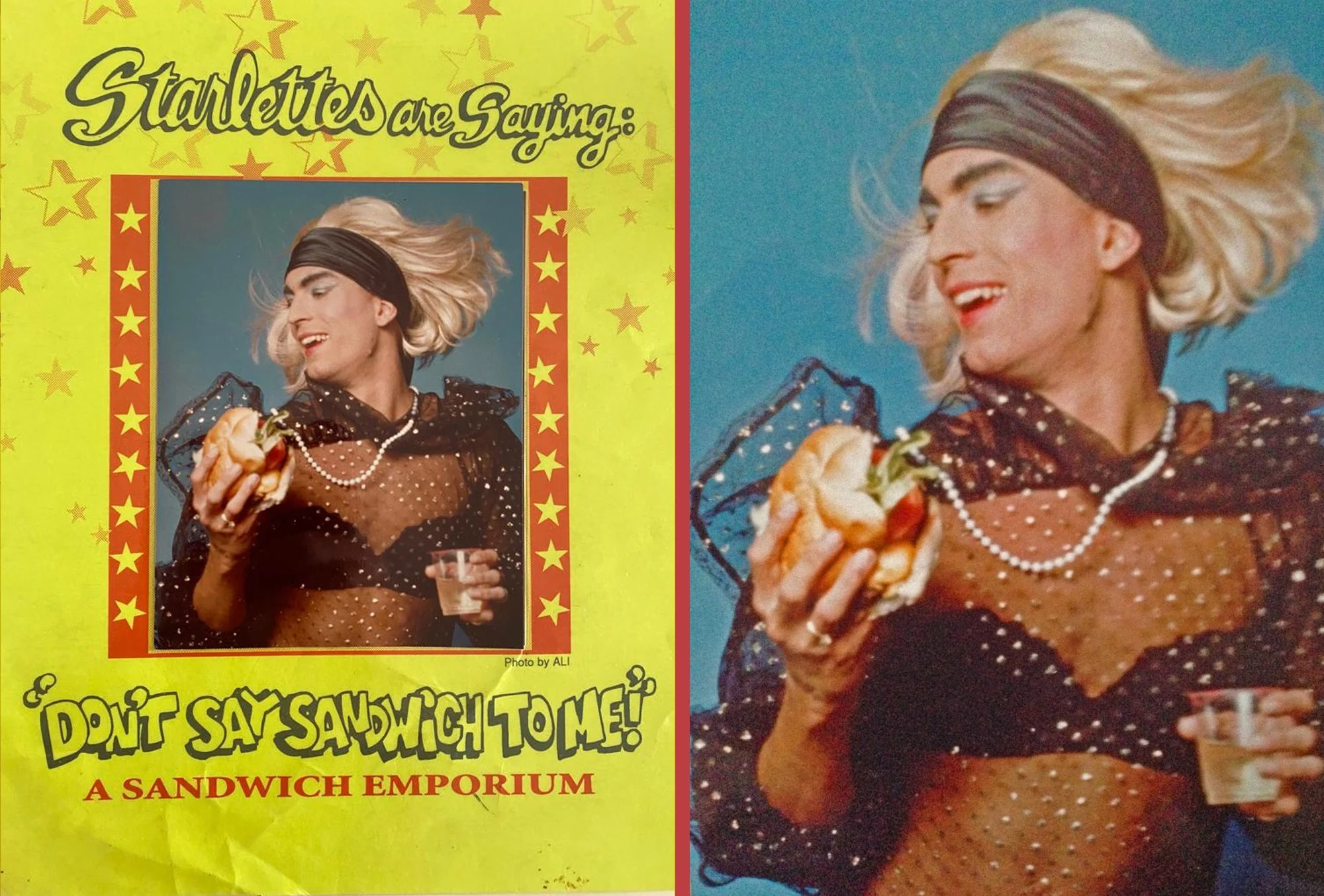
Varla, menu and portrait, 1990s (diptych by SoFLaFoto, 2023)
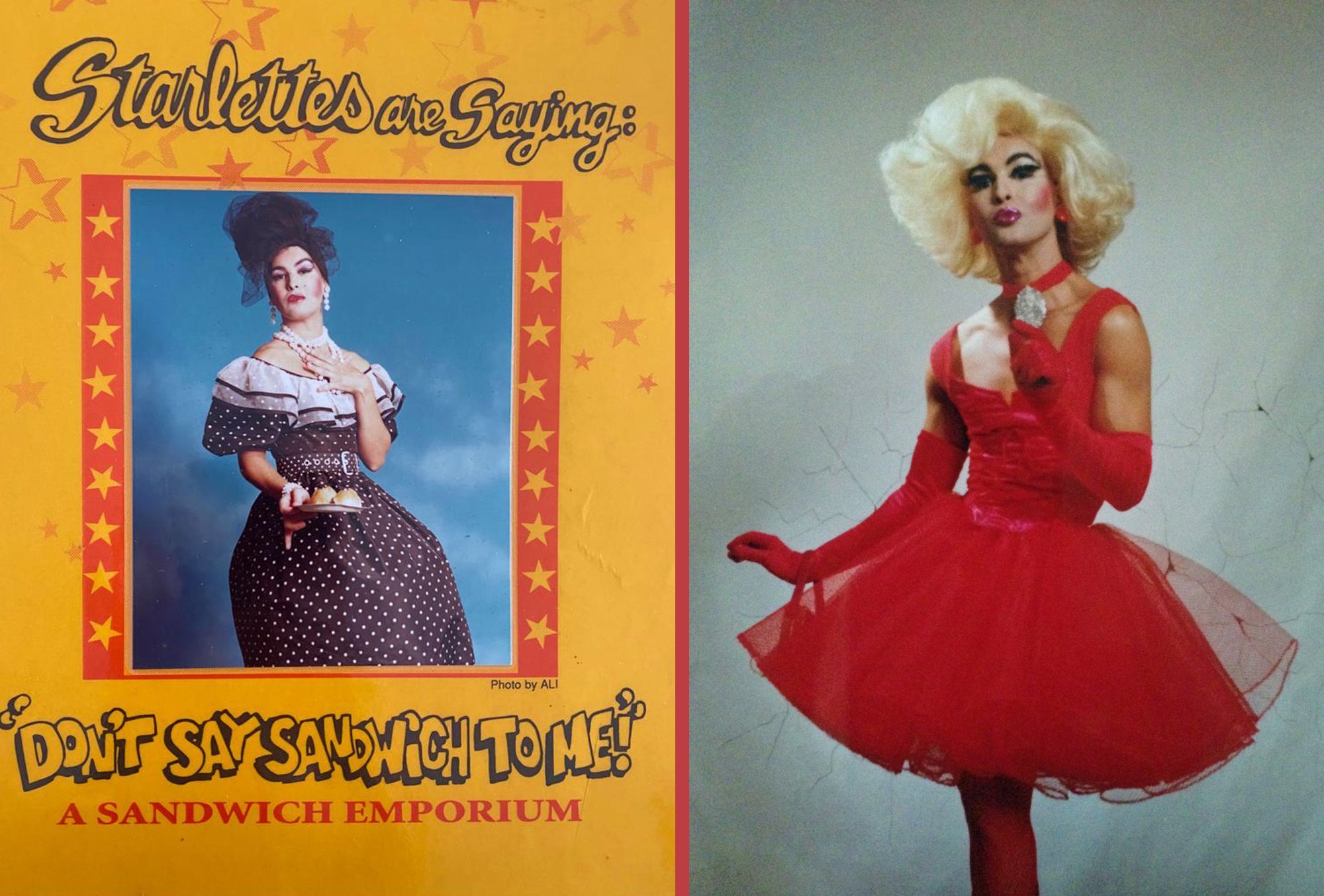
Adora, menu and portrait, 1990s (diptych by SoFLaFoto, 2023)
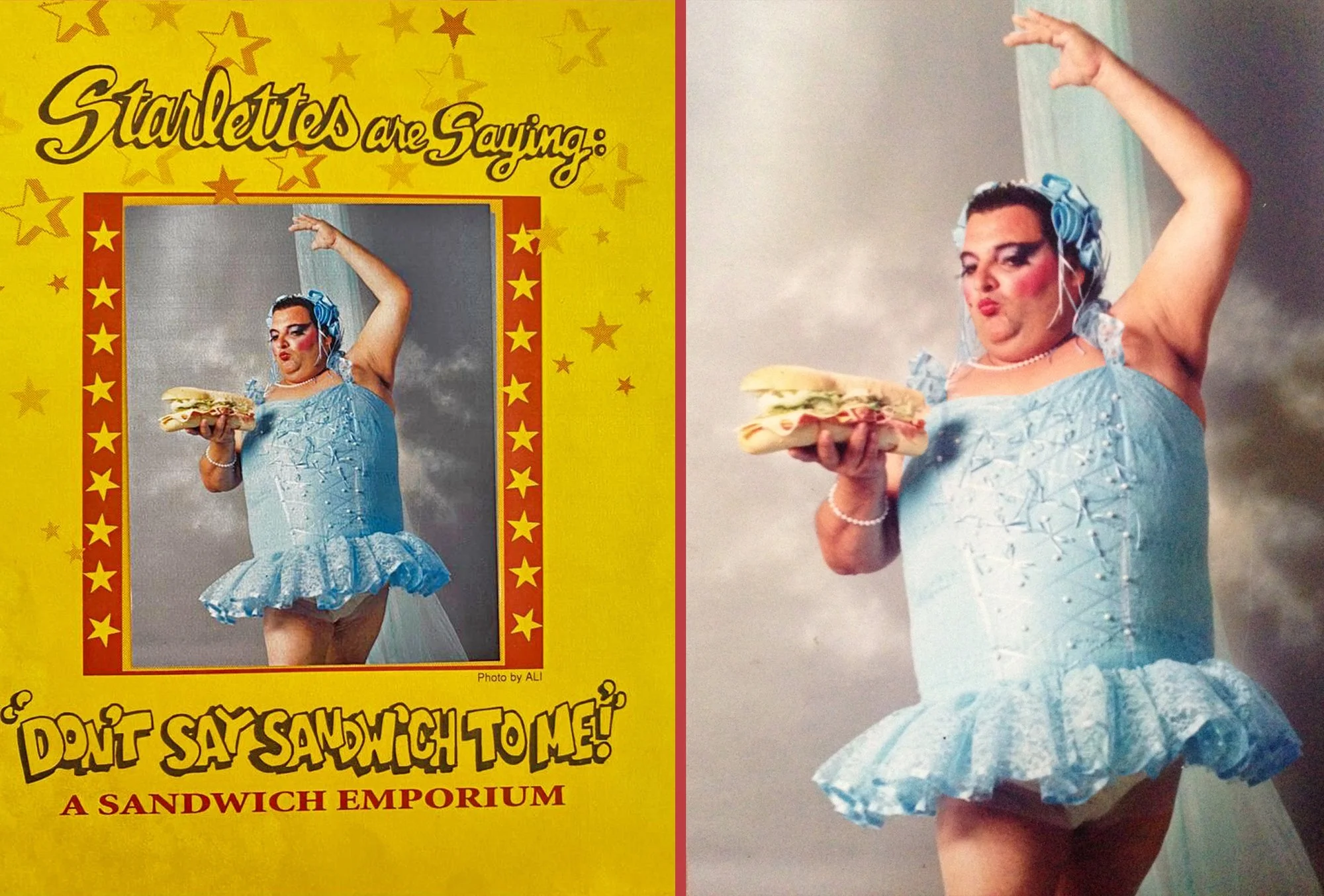
Tiny, menu and portrait, 1990s (diptych by SoFLaFoto, 2023)
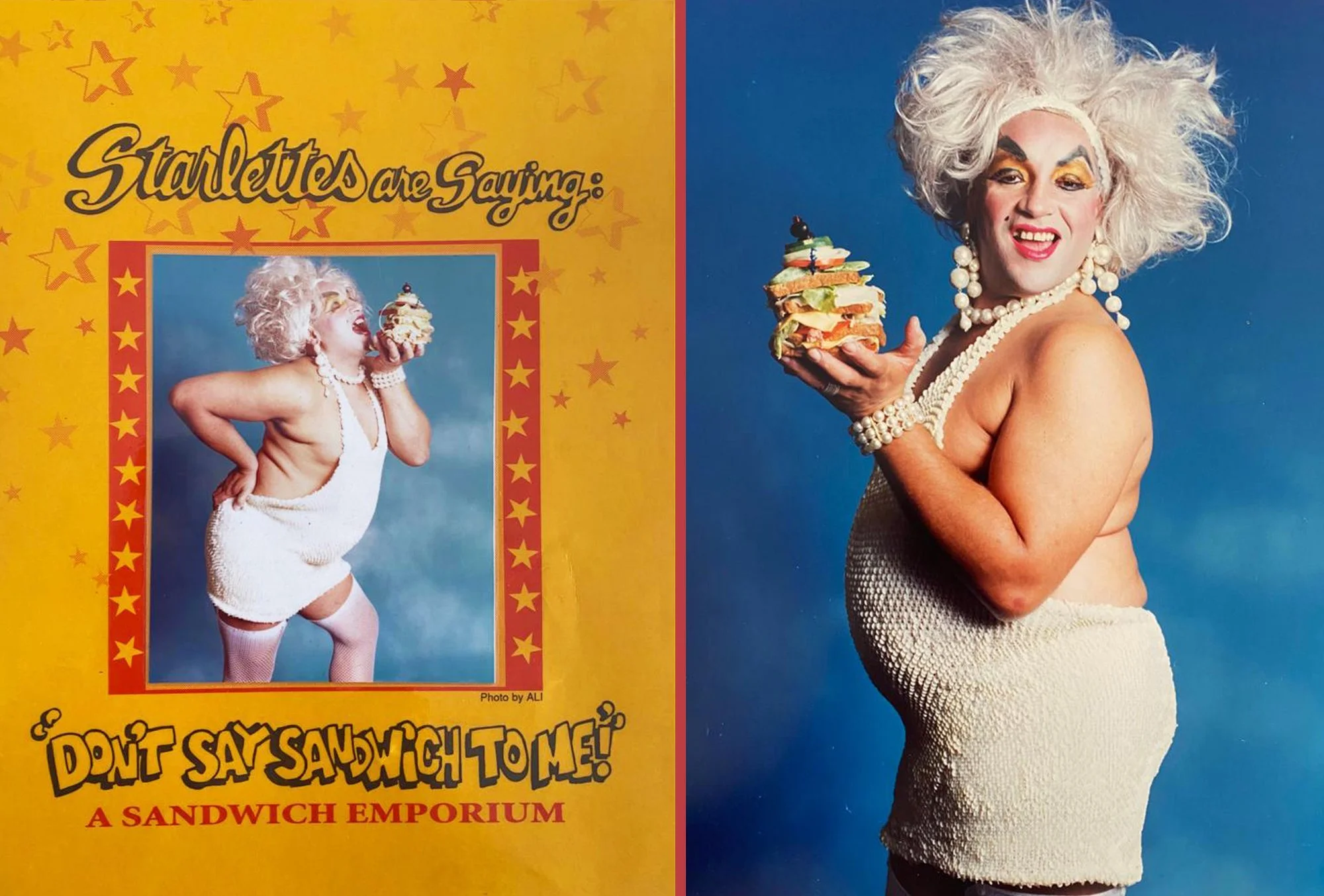
Divina, menu and portrait, 1990s (diptych by SoFLaFoto, 2023)
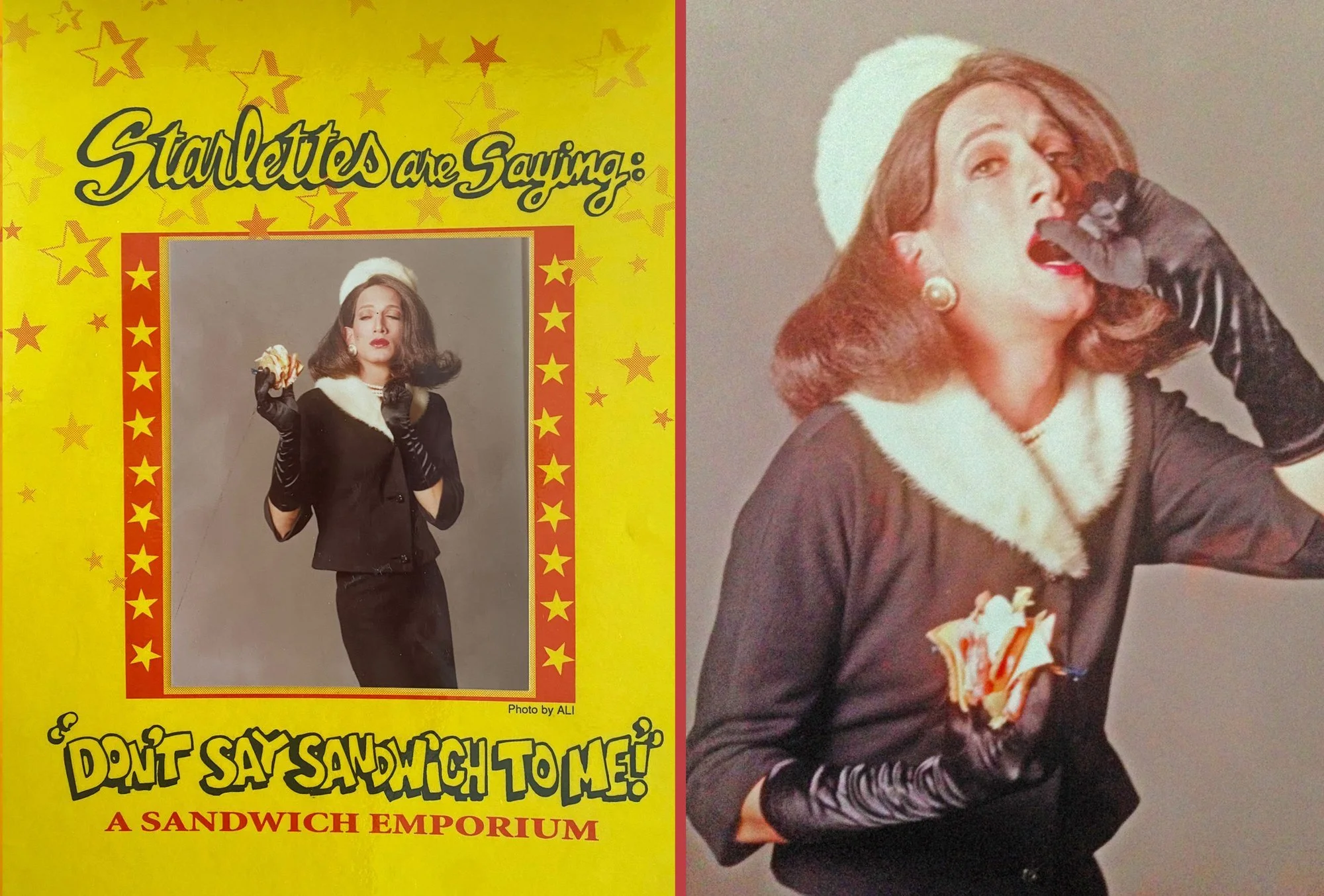
Jackie O, menu and portrait, 1990s (diptych by SoFLaFoto, 2023)
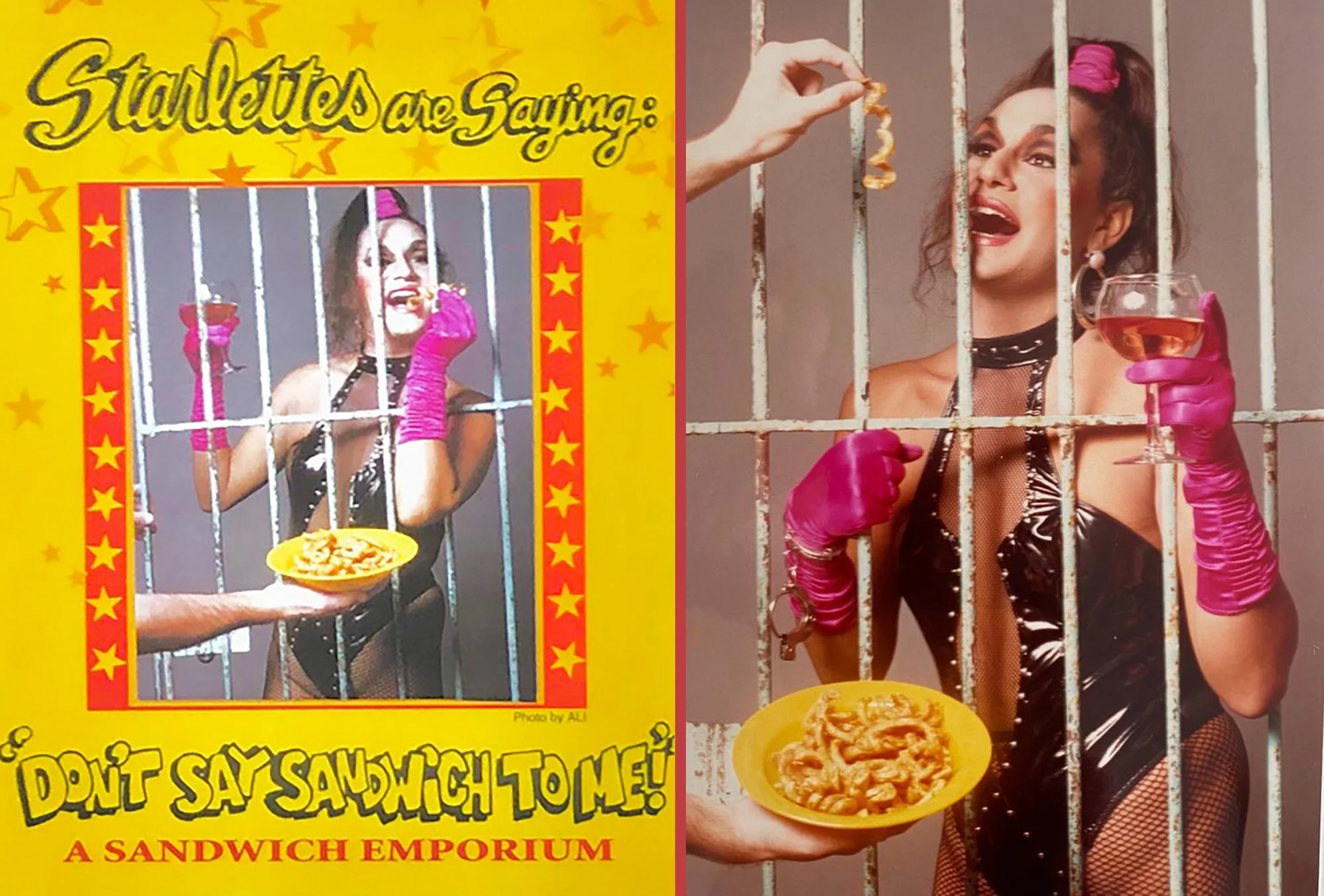
Paloma, menu and portrait, 1990s (diptych by SoFLaFoto, 2023)
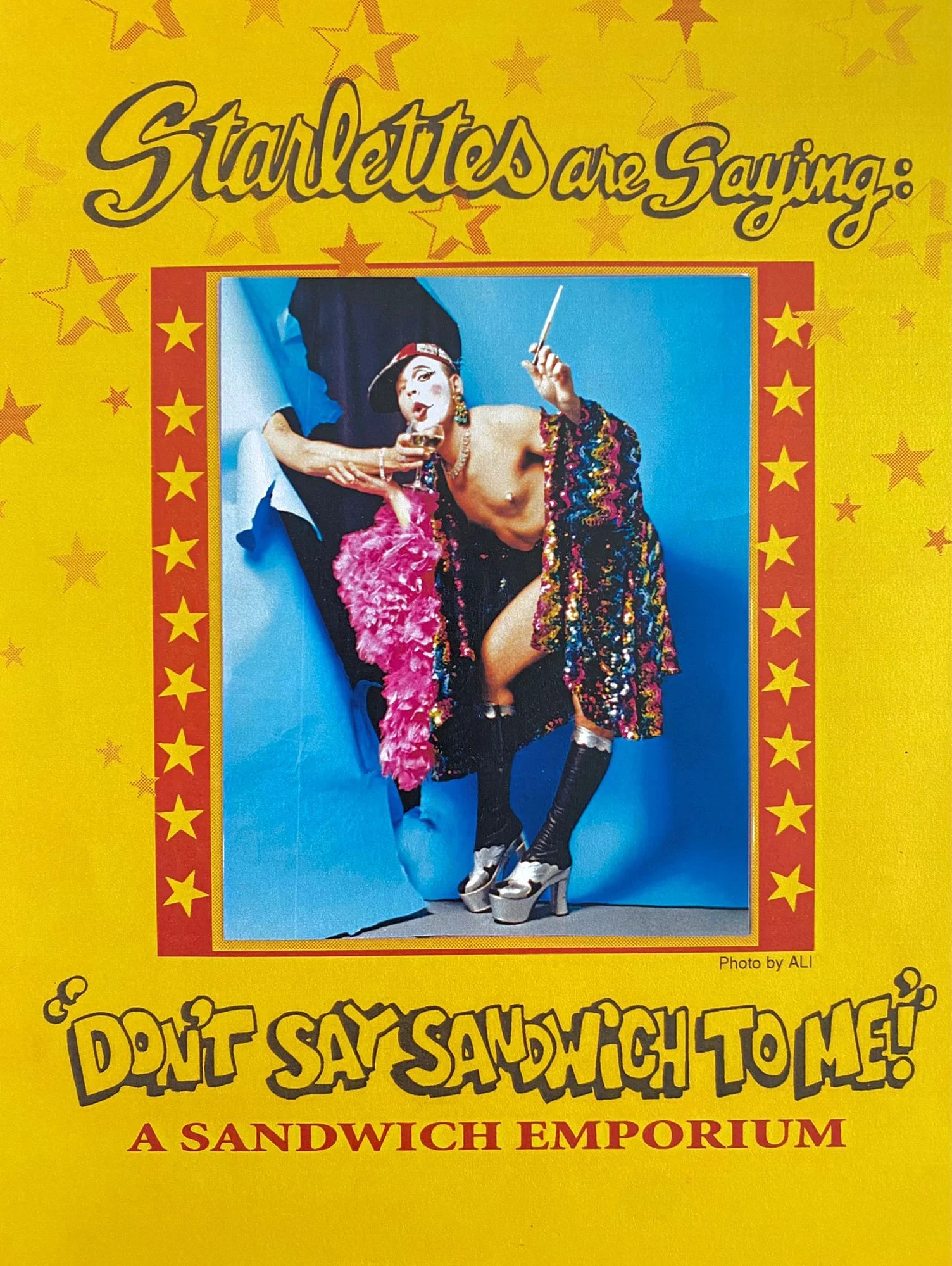
Electra, menu cover, 1990s
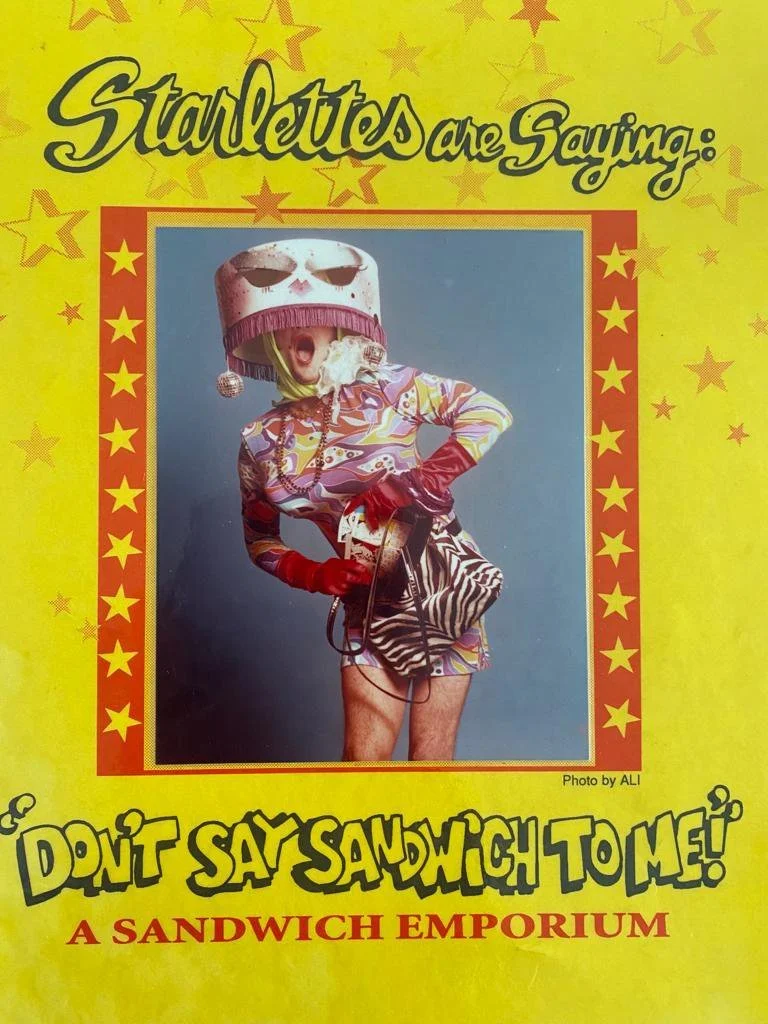
Calina, menu cover, 1990s
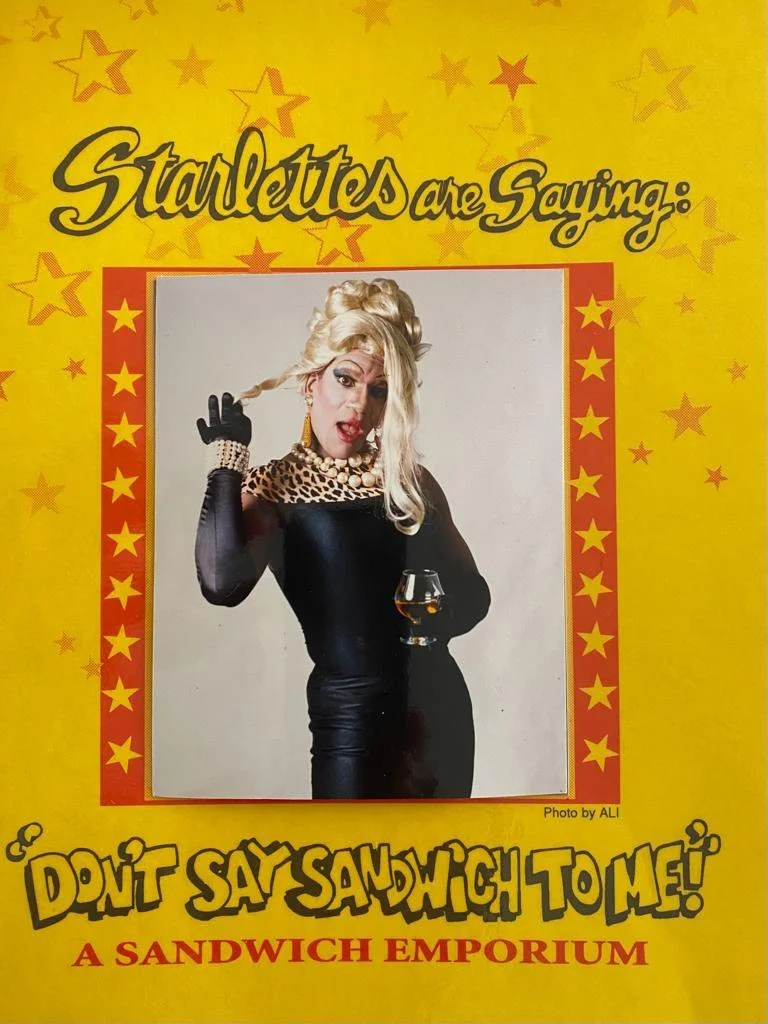
Fifi, menu cover, 1990s
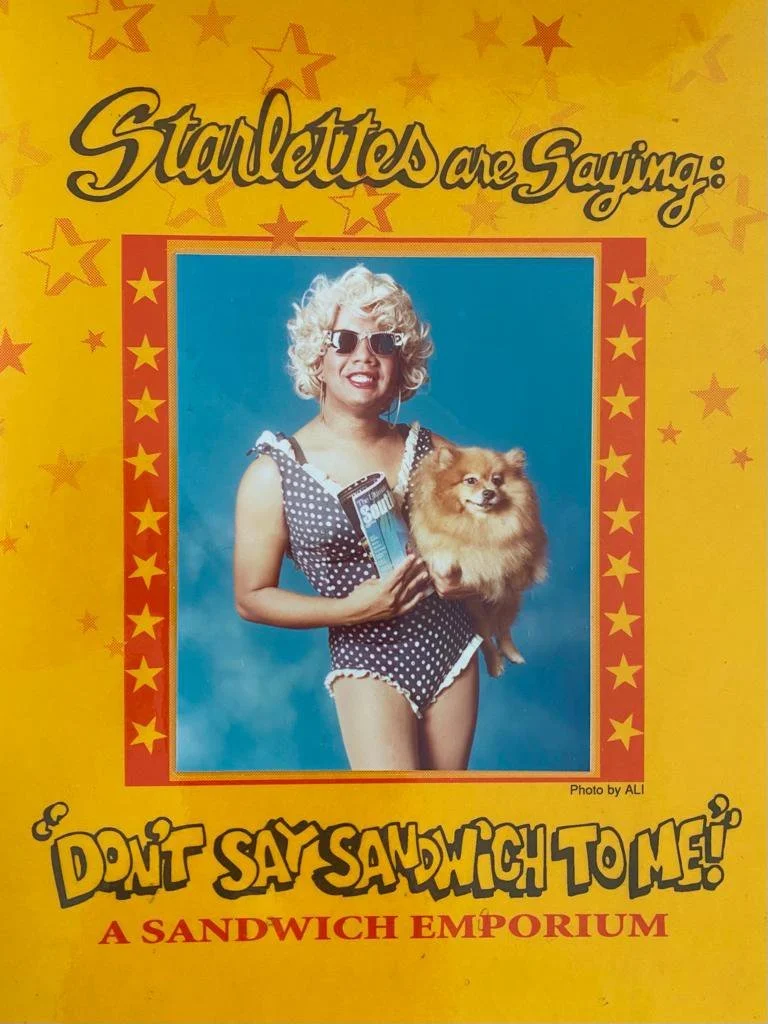
Rafaela, menu cover, 1990s
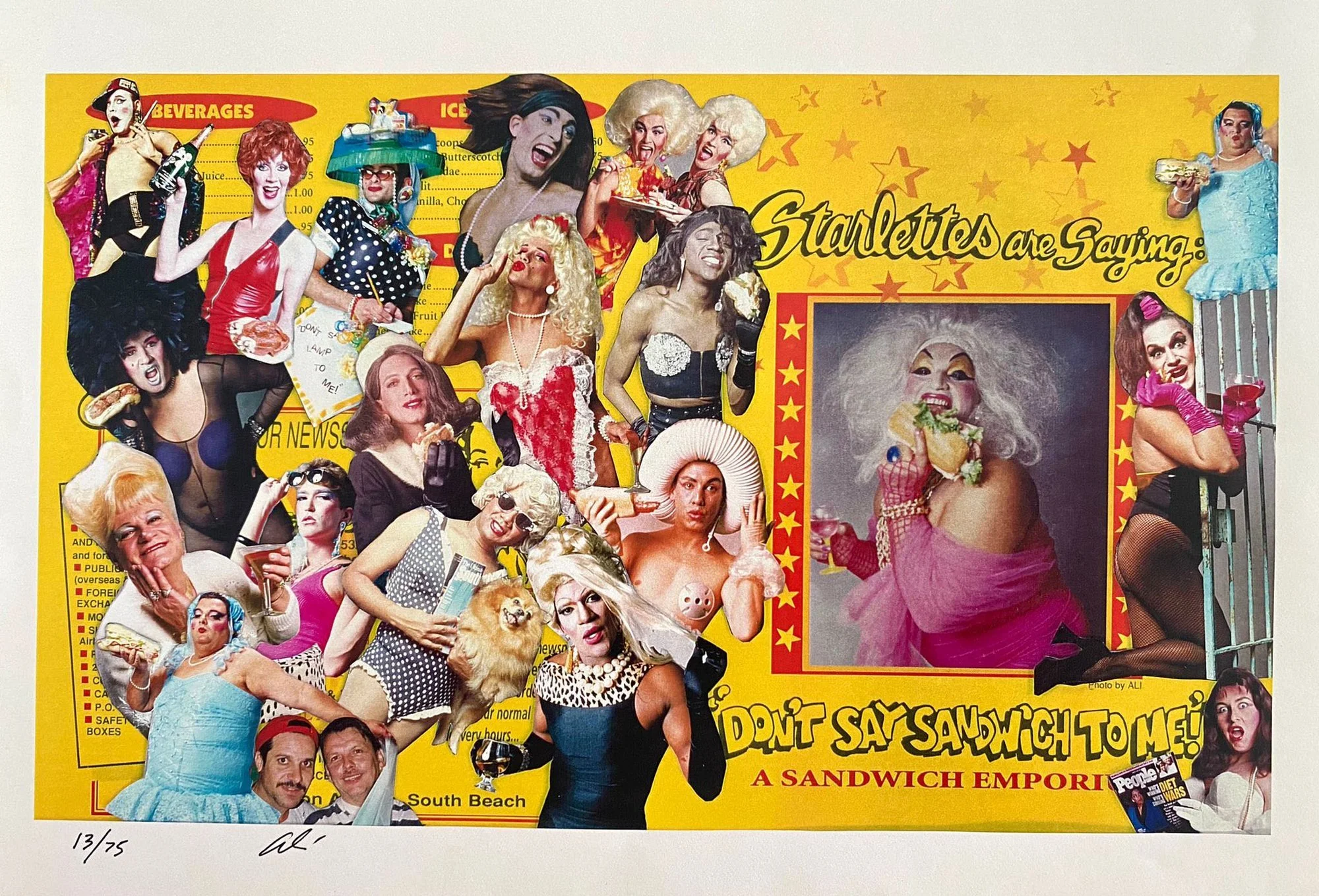
Composite poster of all performers, 8 x 10 in. prints, numbered 13/15
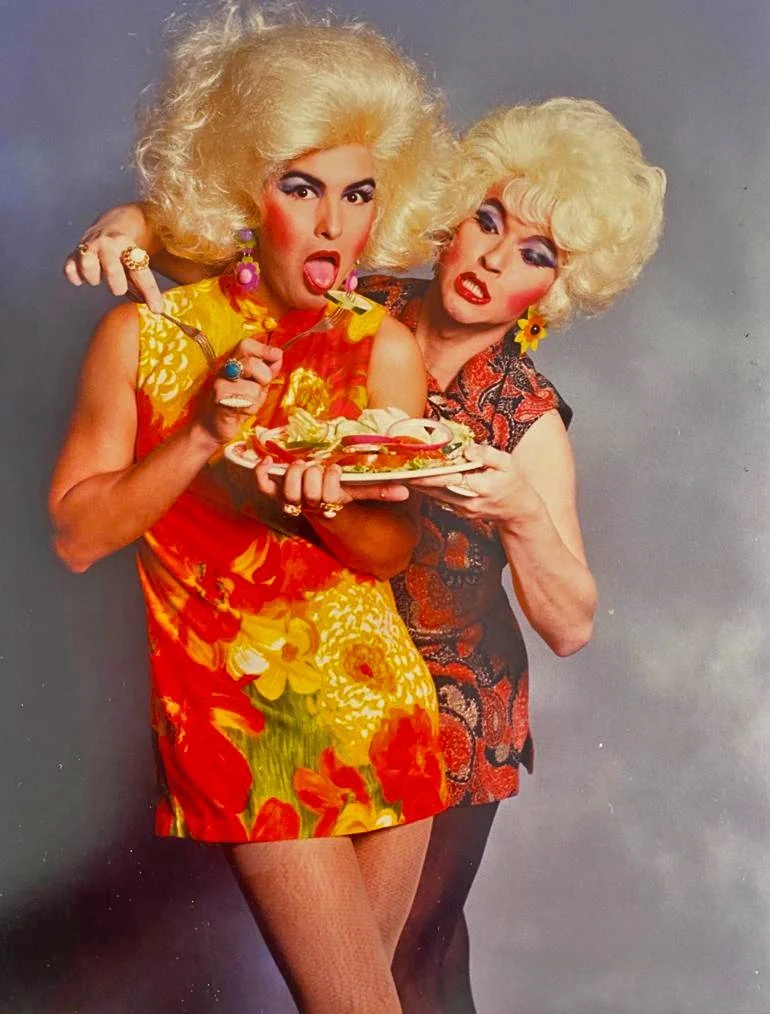
Studio portrait, The Adora Sisters, 1990s
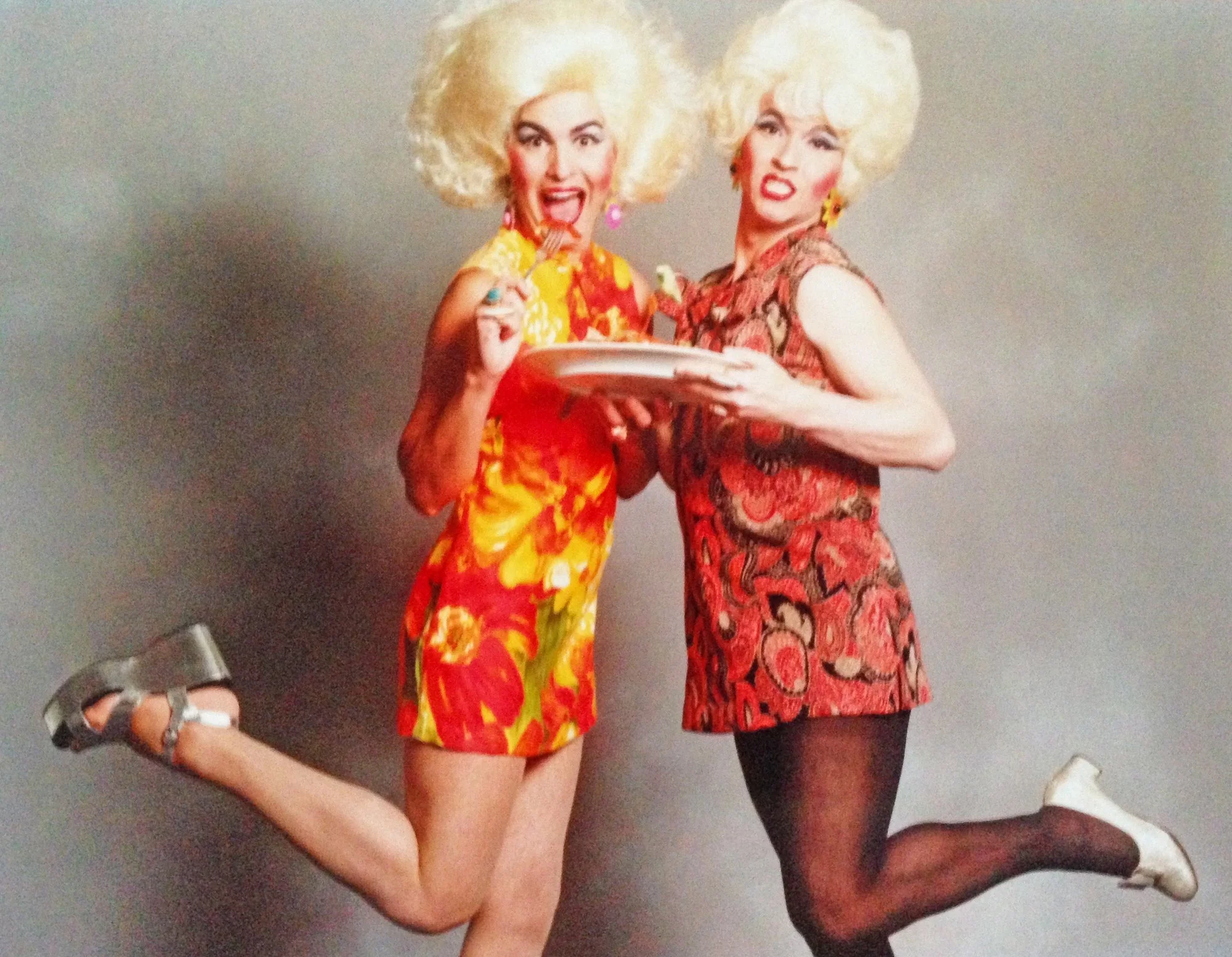
Studio portrait, The Adora Sisters, 1990s
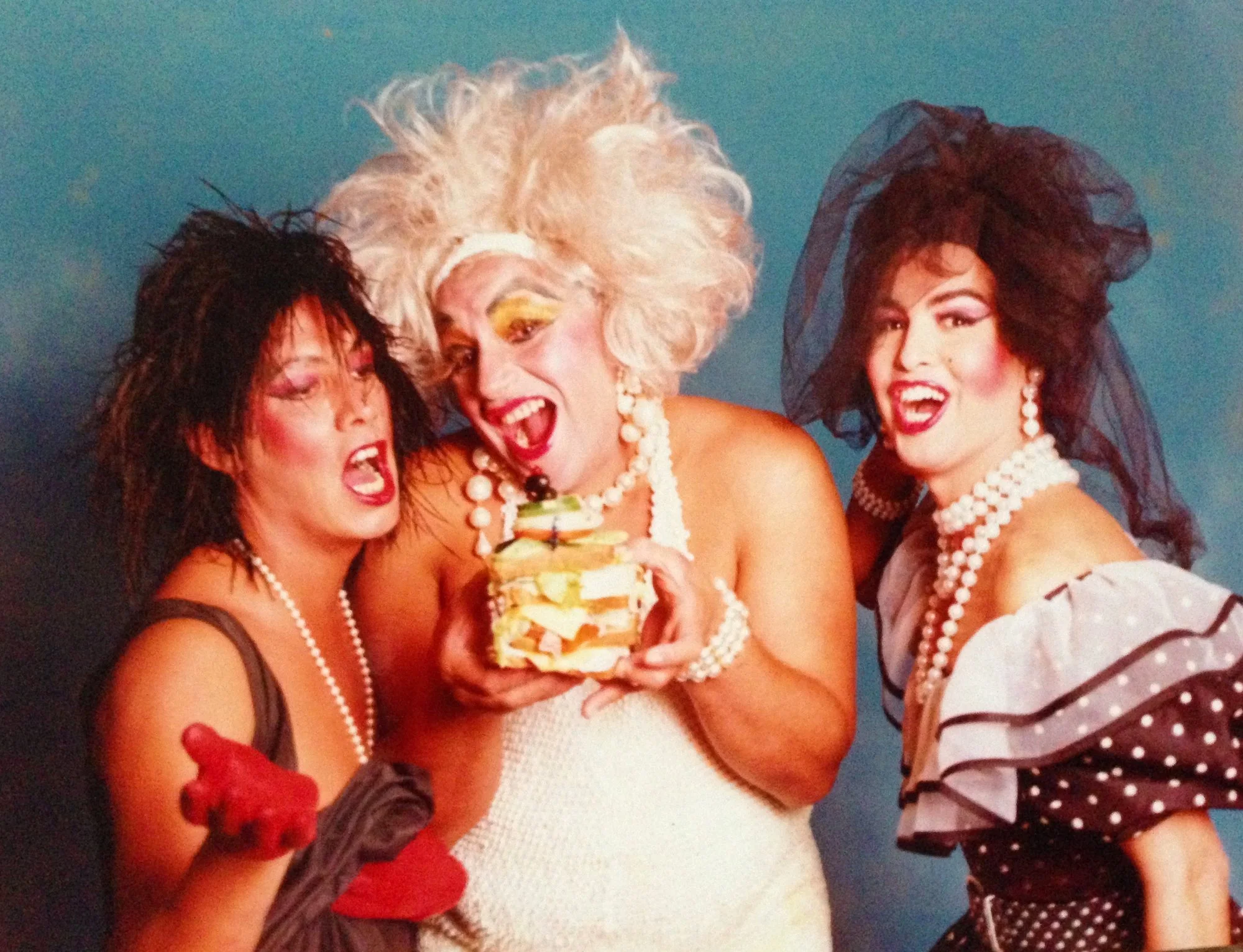
Studio portrait, Adora, Divina and Consuelo, 1990s
03 · THE CITY AT NIGHT
Miami Gay Scene
La Escuelita · [year to be confirmed] · black and white
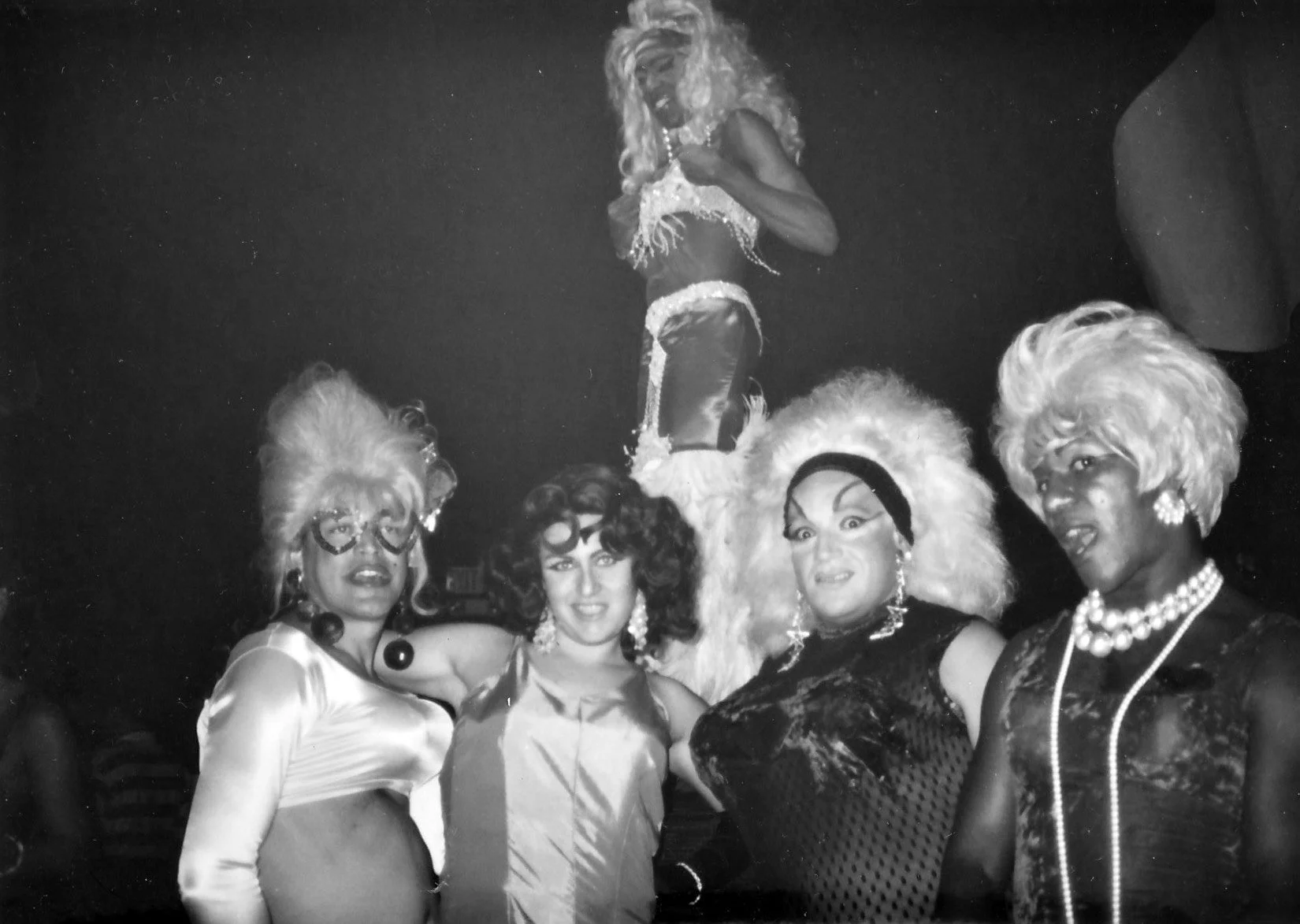
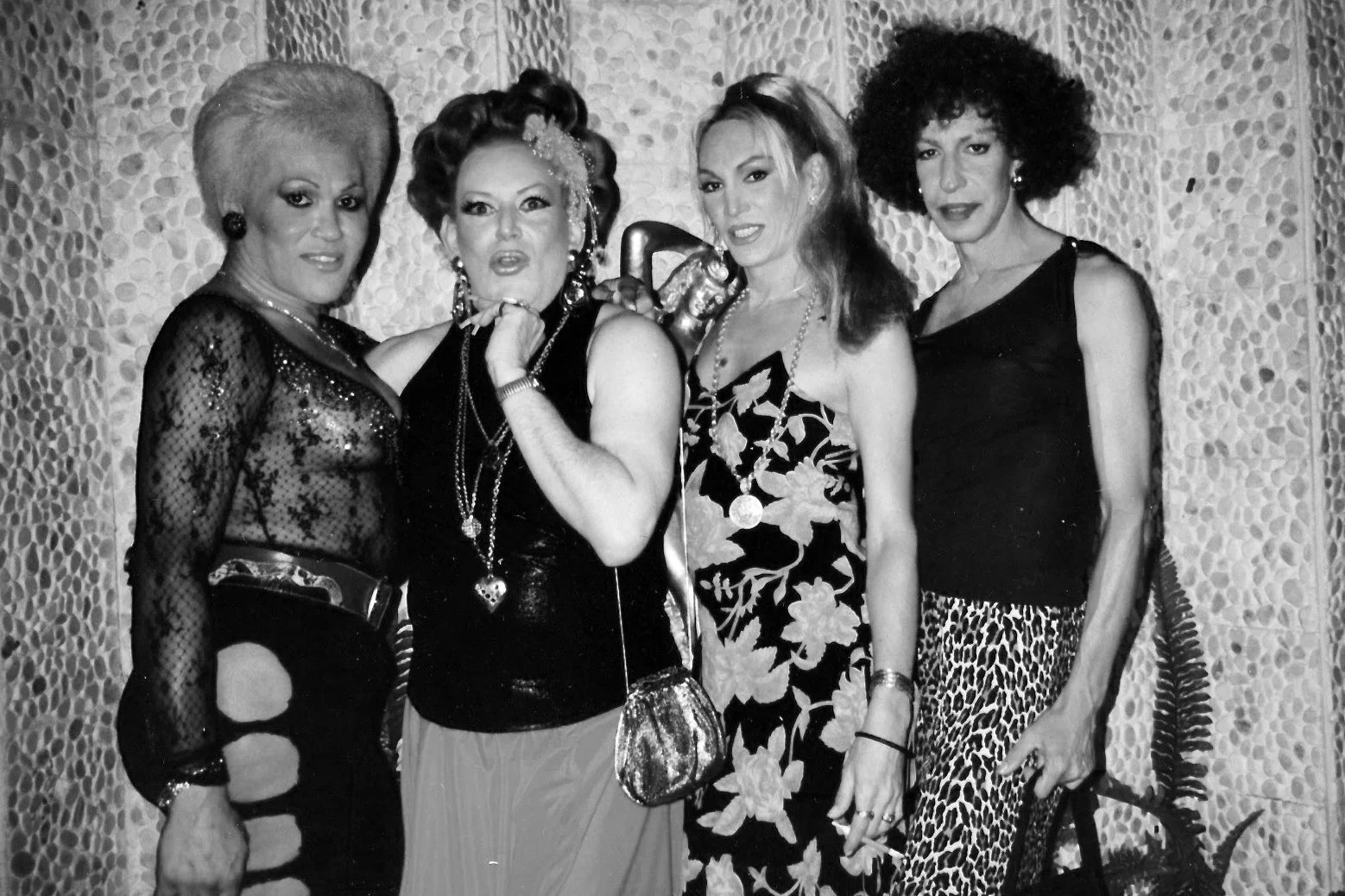
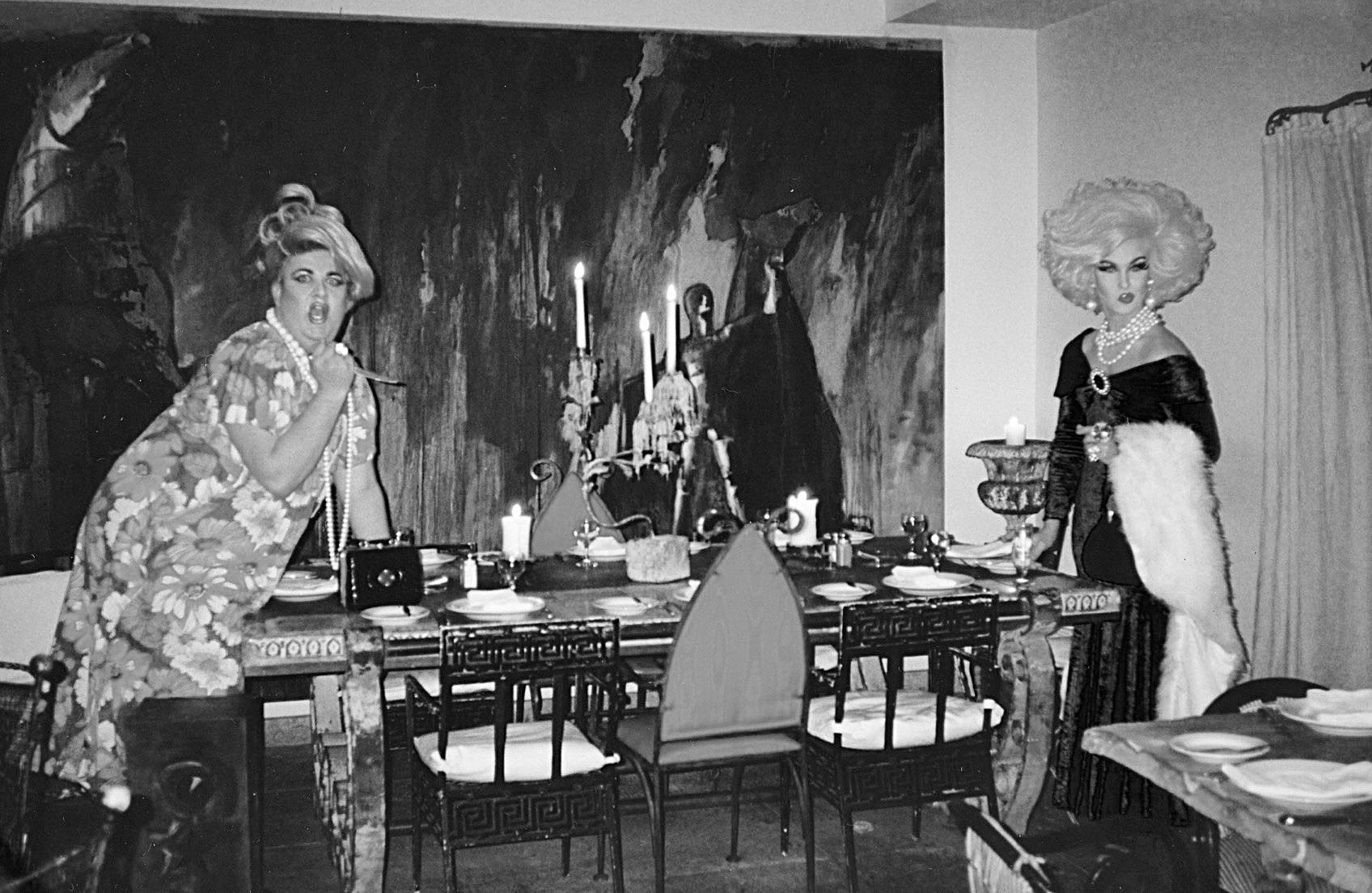
After dark, the flash goes off. On a staircase, in the press of the crowd, around a table crowded with friends at La Escuelita, the night comes back in hard black and white: towering wigs, bare shoulders, everyone leaning in for the picture.
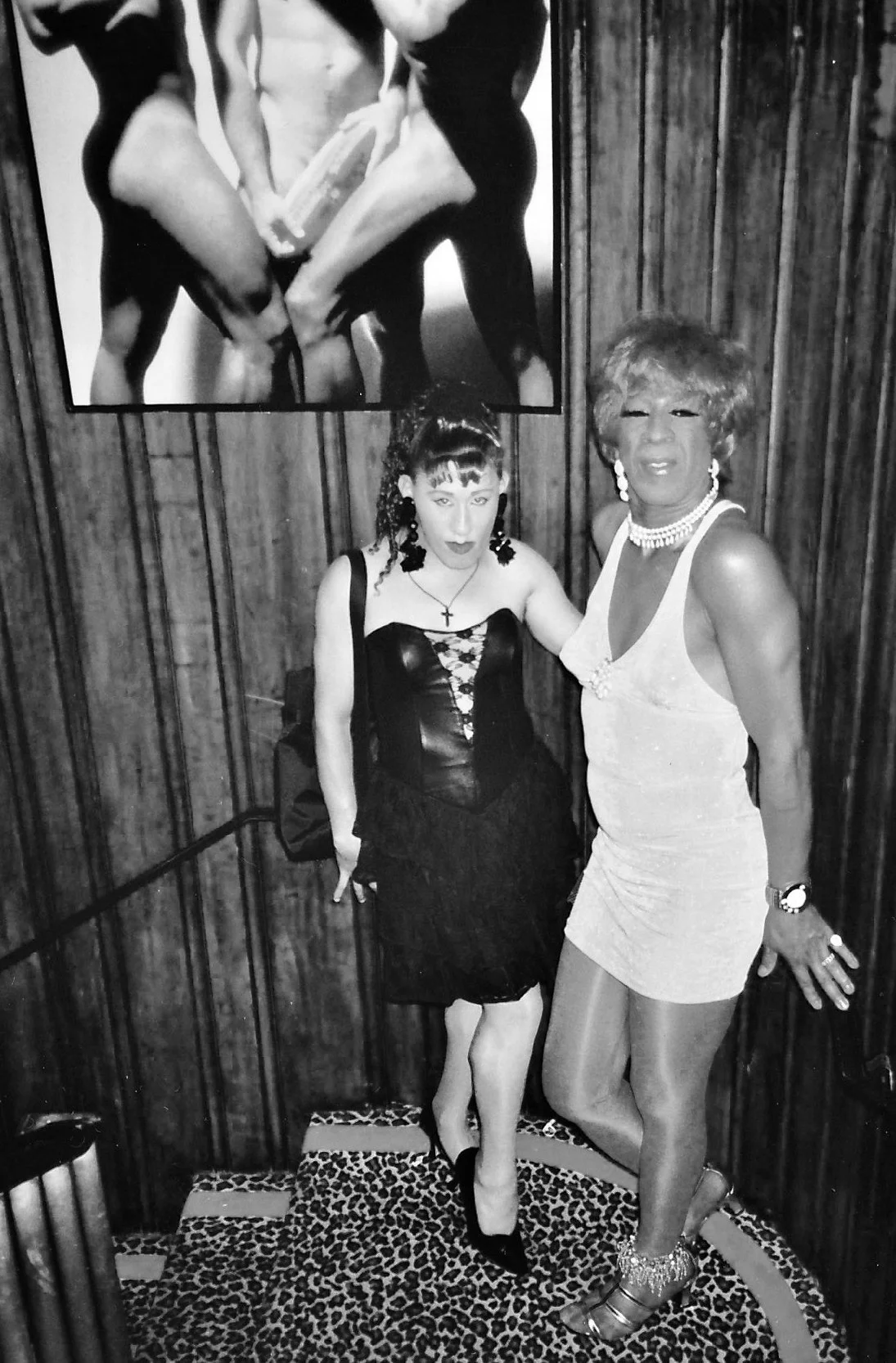
On the stairs, La Escuelita
In the club, La Escuelita
Four performers, La Escuelita
At a dinner table, La Escuelita
04 · THE STUDIO
Content advisory: the three studio sections that follow contain nudity.
Male Erotica
1990 · black and white
In the studio the body turns to sculpture. A torso rises from a column, drapery falls like marble, light carves muscle out of shadow. Ali takes up the classical male nude, the line of George Platt Lynes and Robert Mapplethorpe, and lets it slip toward mask and ritual.
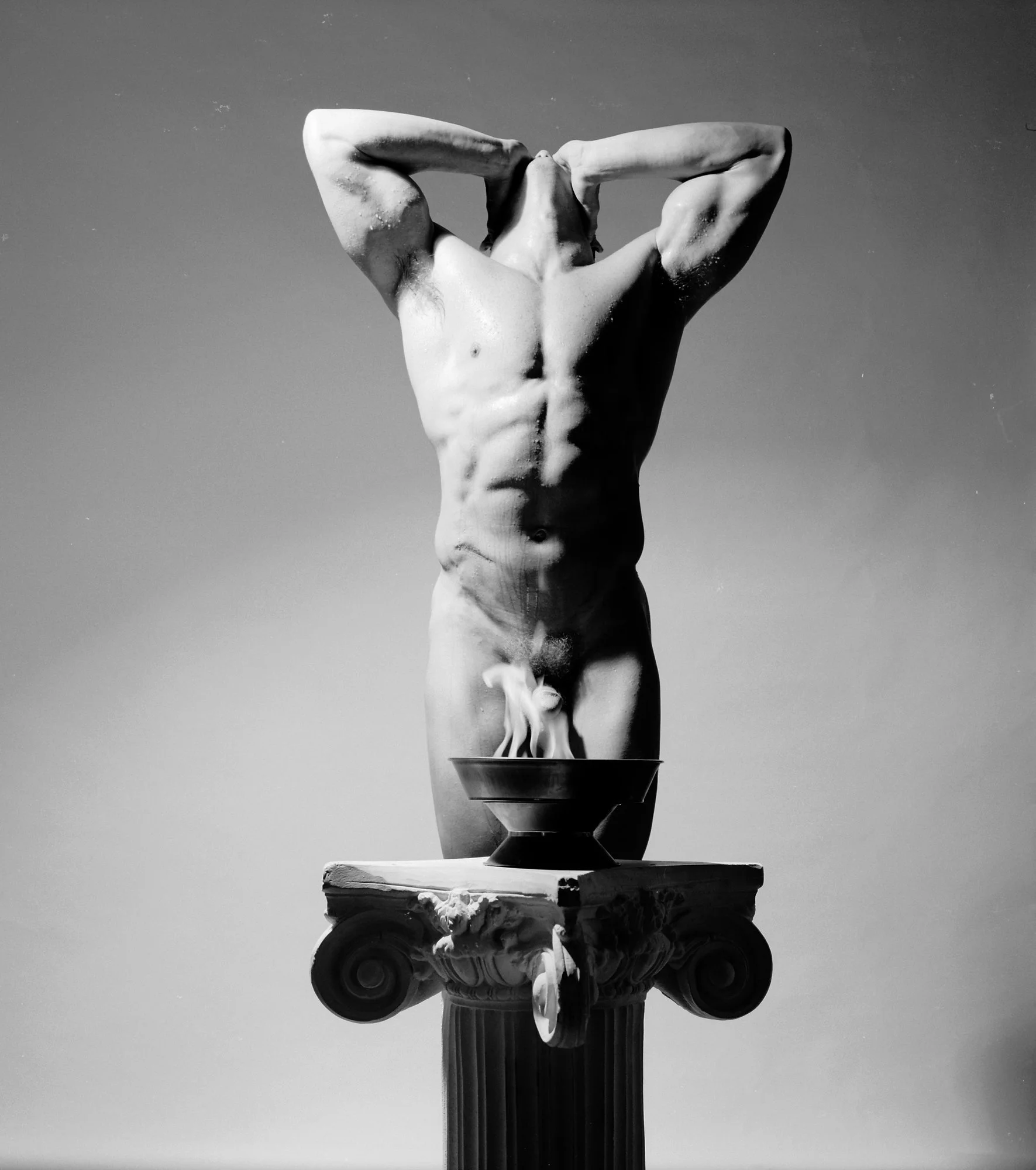
Torso on a column, 1990
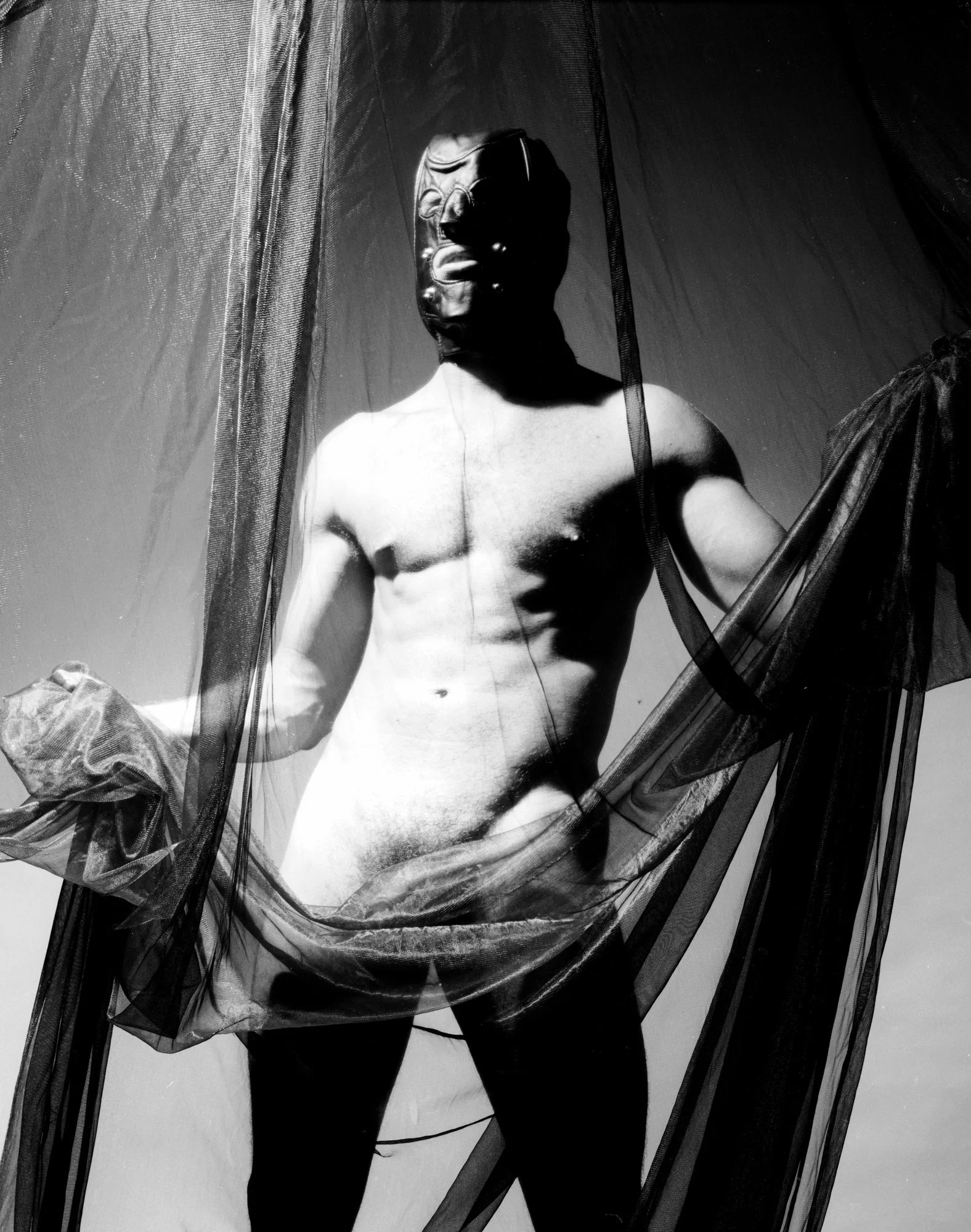
Masked figure with sheer drapery, 1990
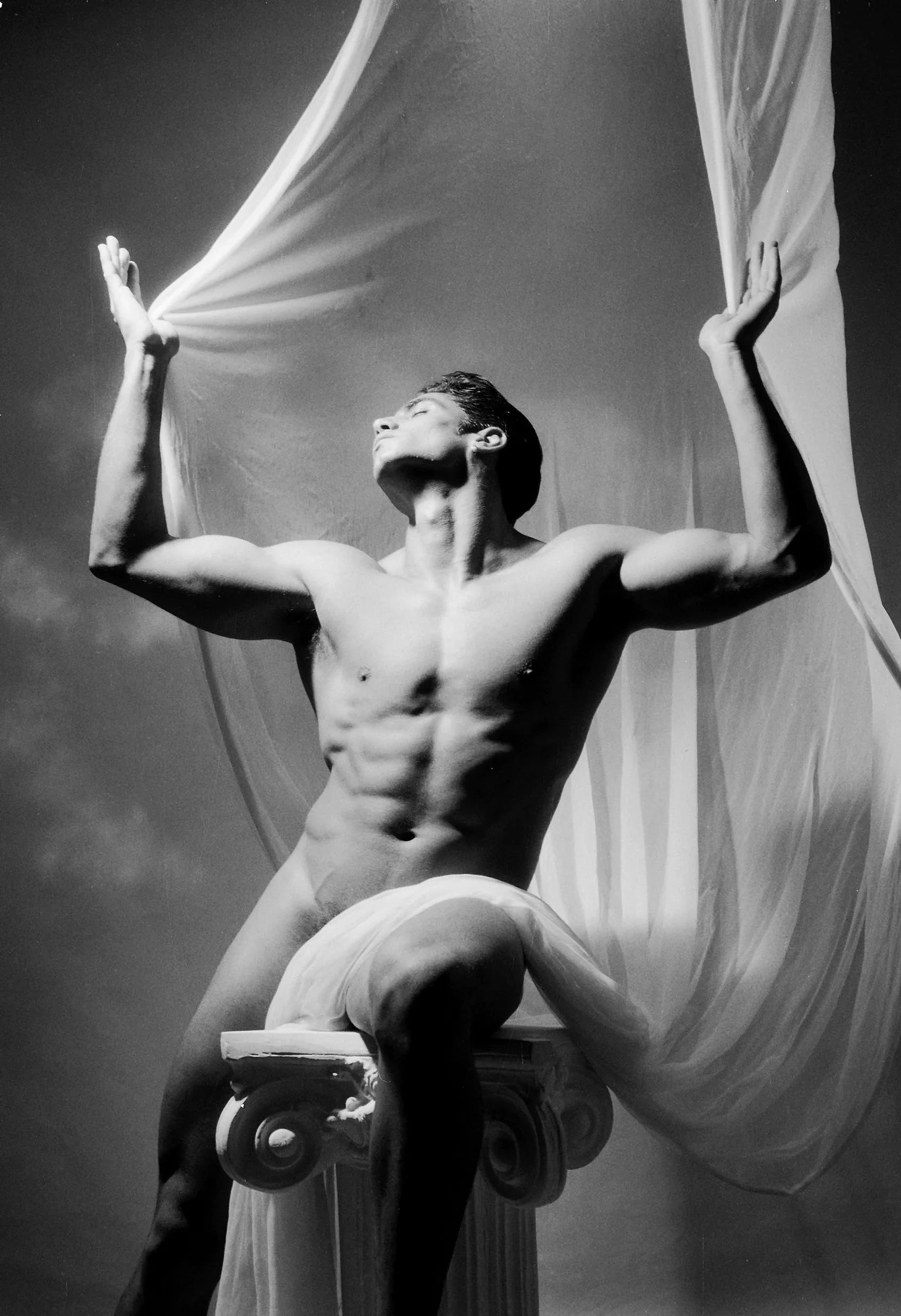
Seated figure with drapery, 1990
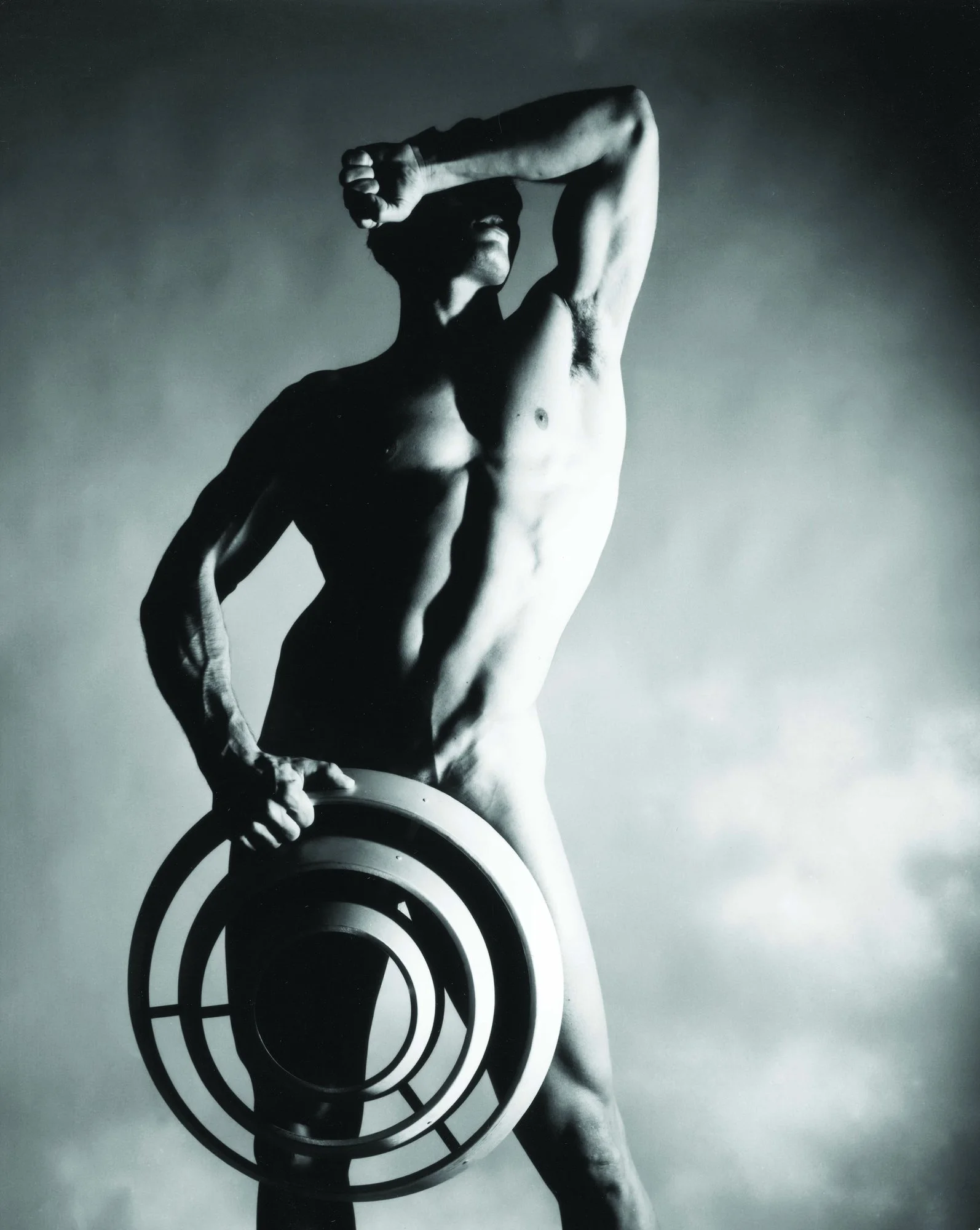
Figure with concentric rings, 1990
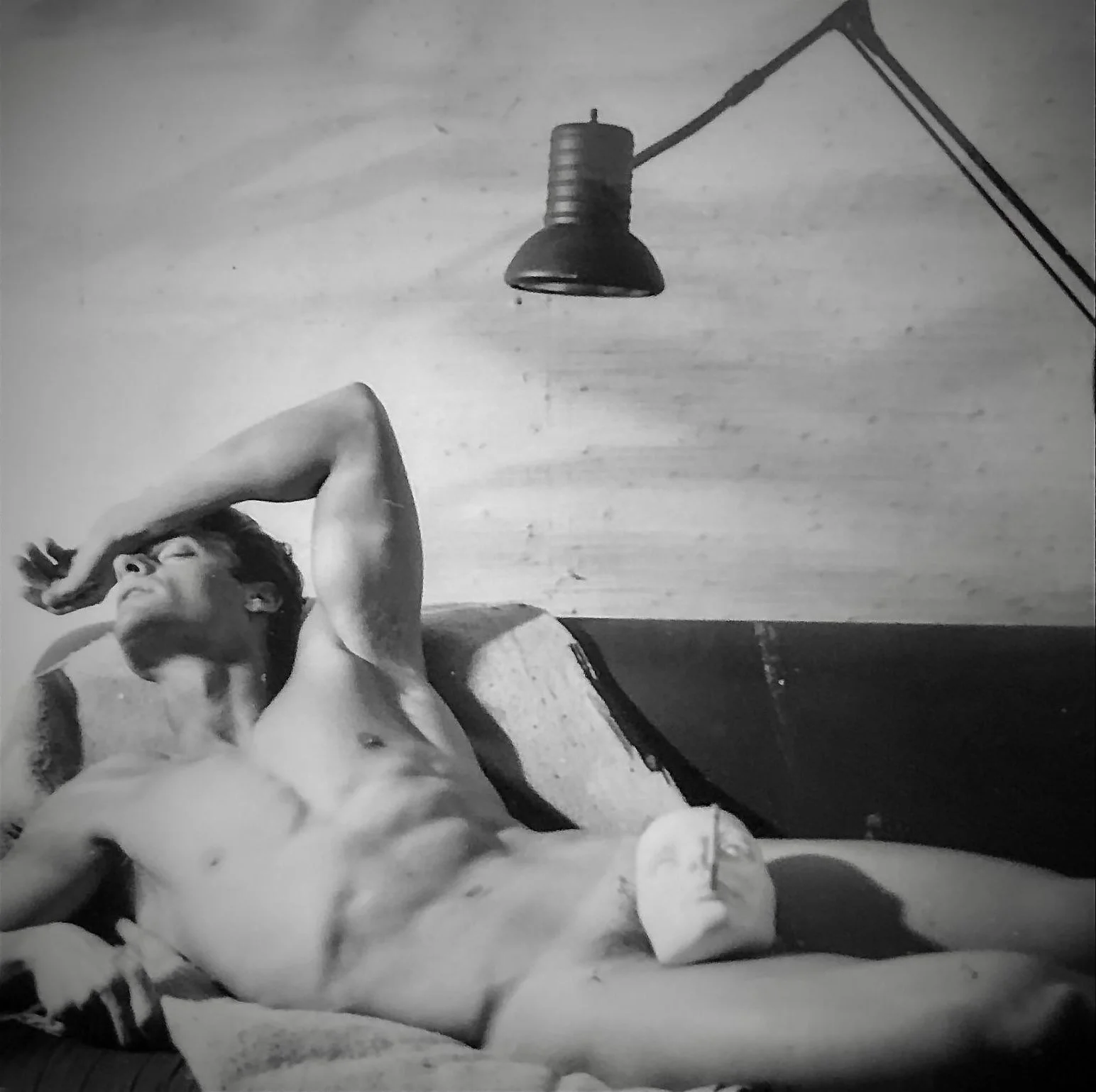
Reclining figure under a lamp, 1990
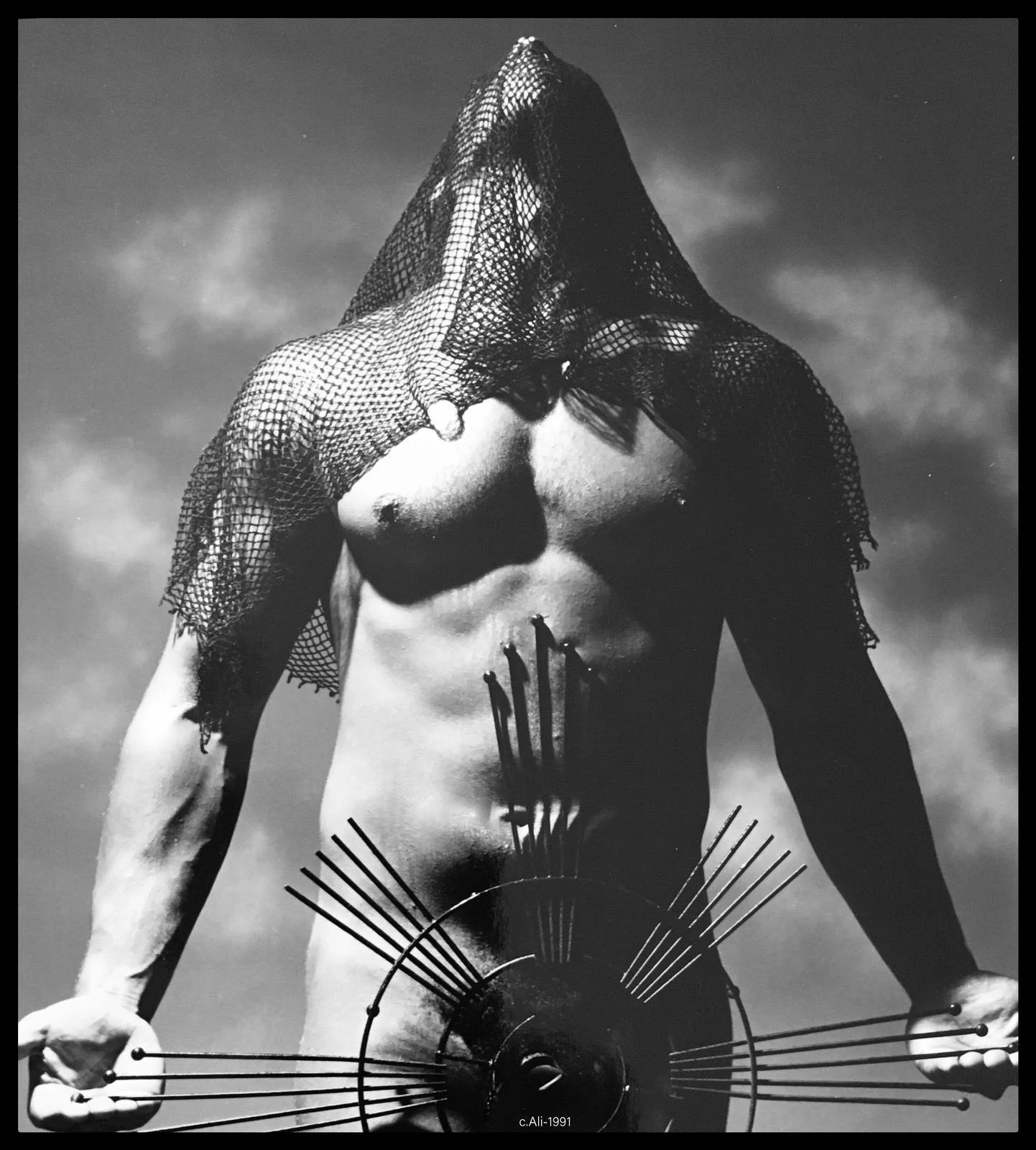
Fishnet hood, halo of rods, inscribed c. 1991
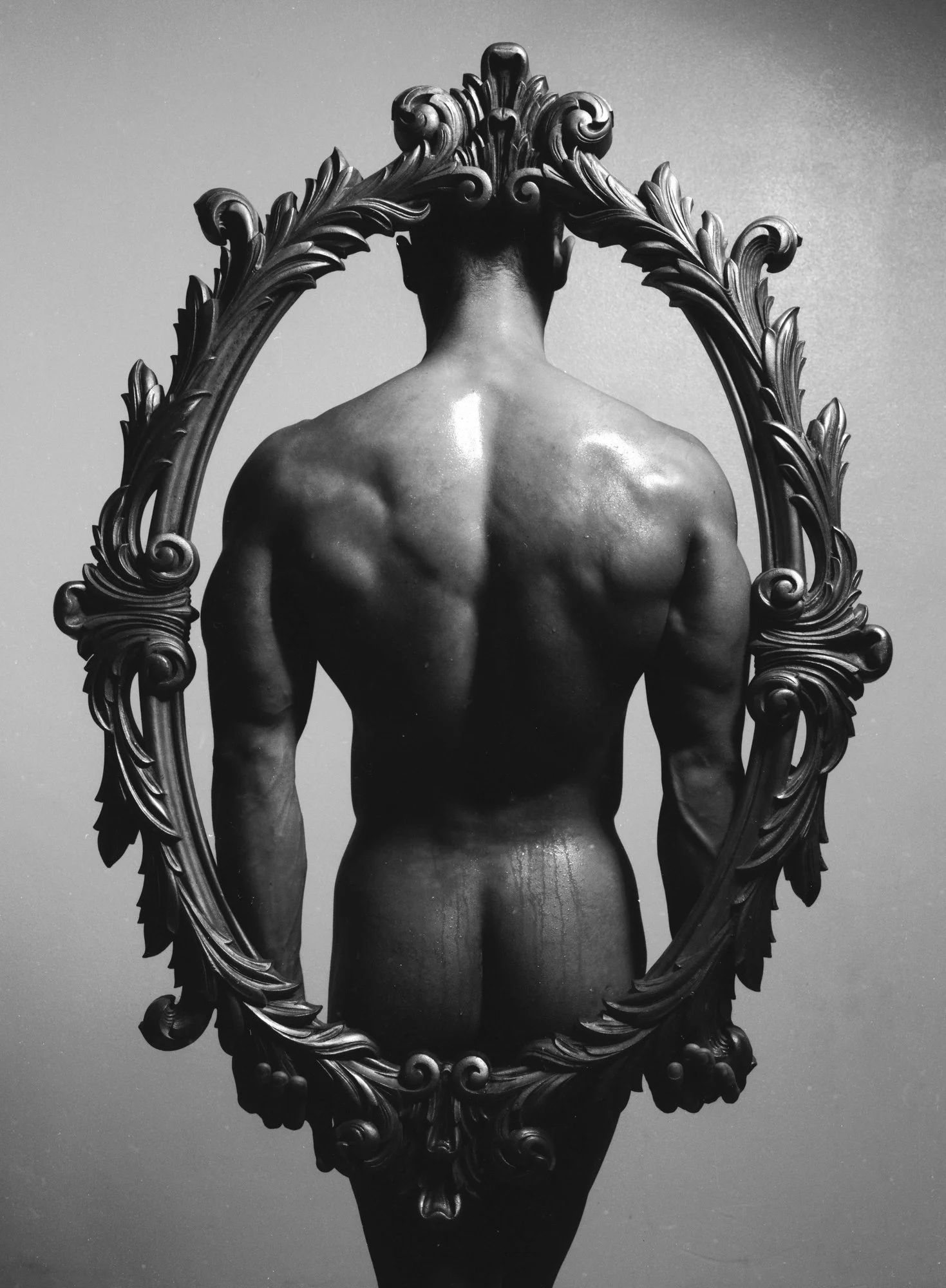
Male back in a baroque frame, 1990
05 · THE STUDIO
Carni-val
1990 · photomontage diptychs
Two photographs side by side, stitched together with charms. Saints, tarot cards, masks and small ornaments cross the seam, and each diptych becomes a small altar to desire: half devotion, half carnival.
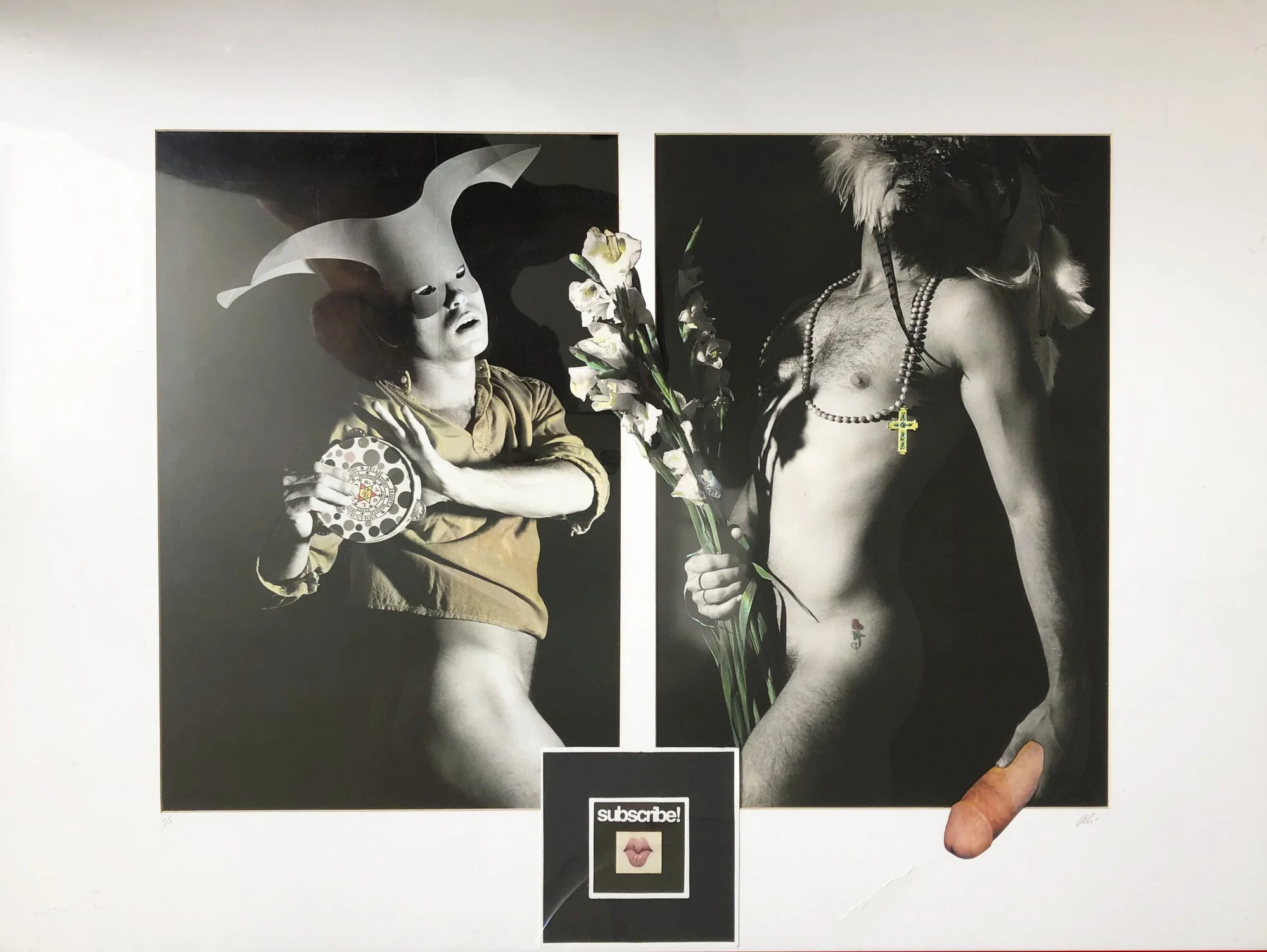
Carni-val 01, 1990
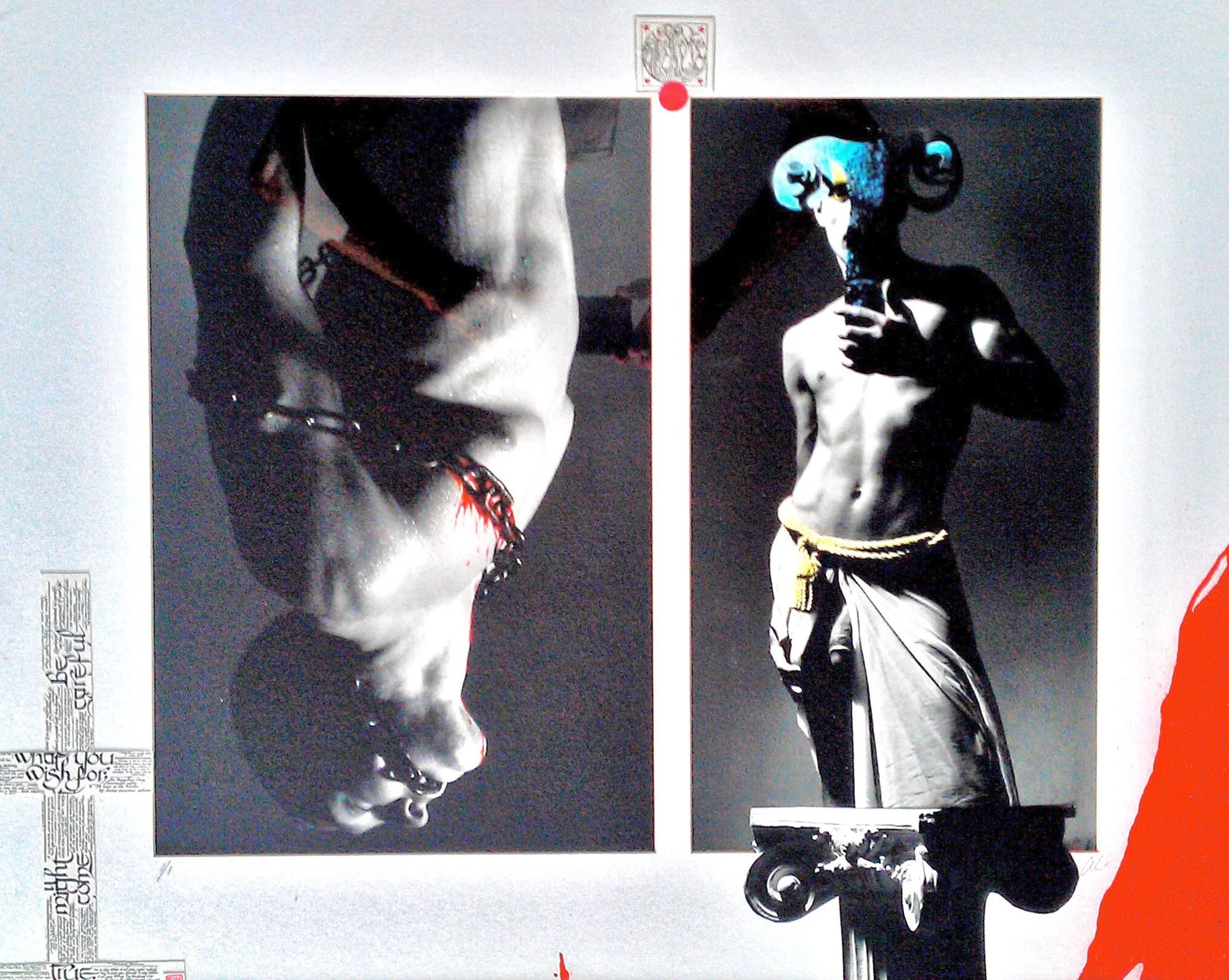
Carni-val 02, 1990
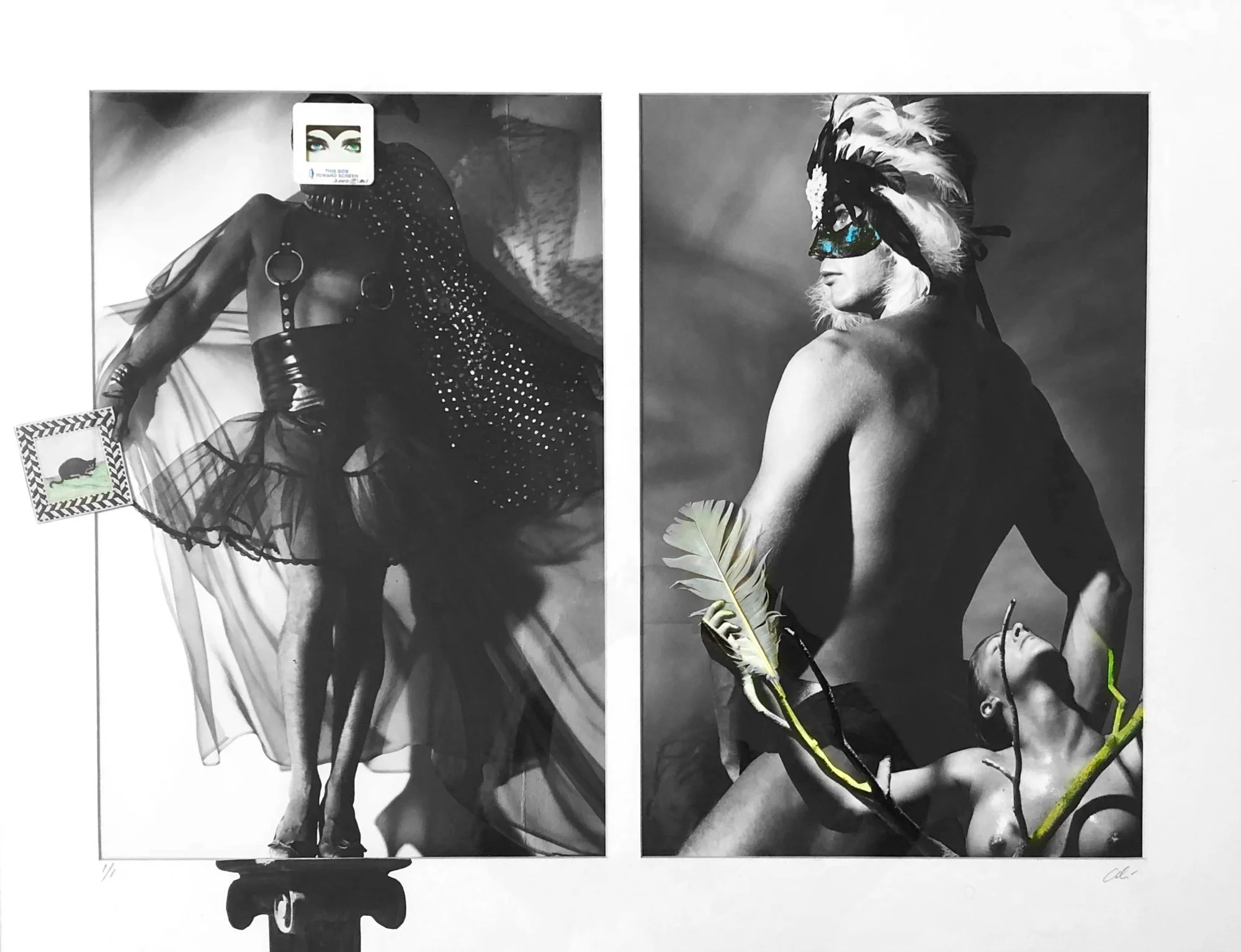
Carni-val 03, 1990
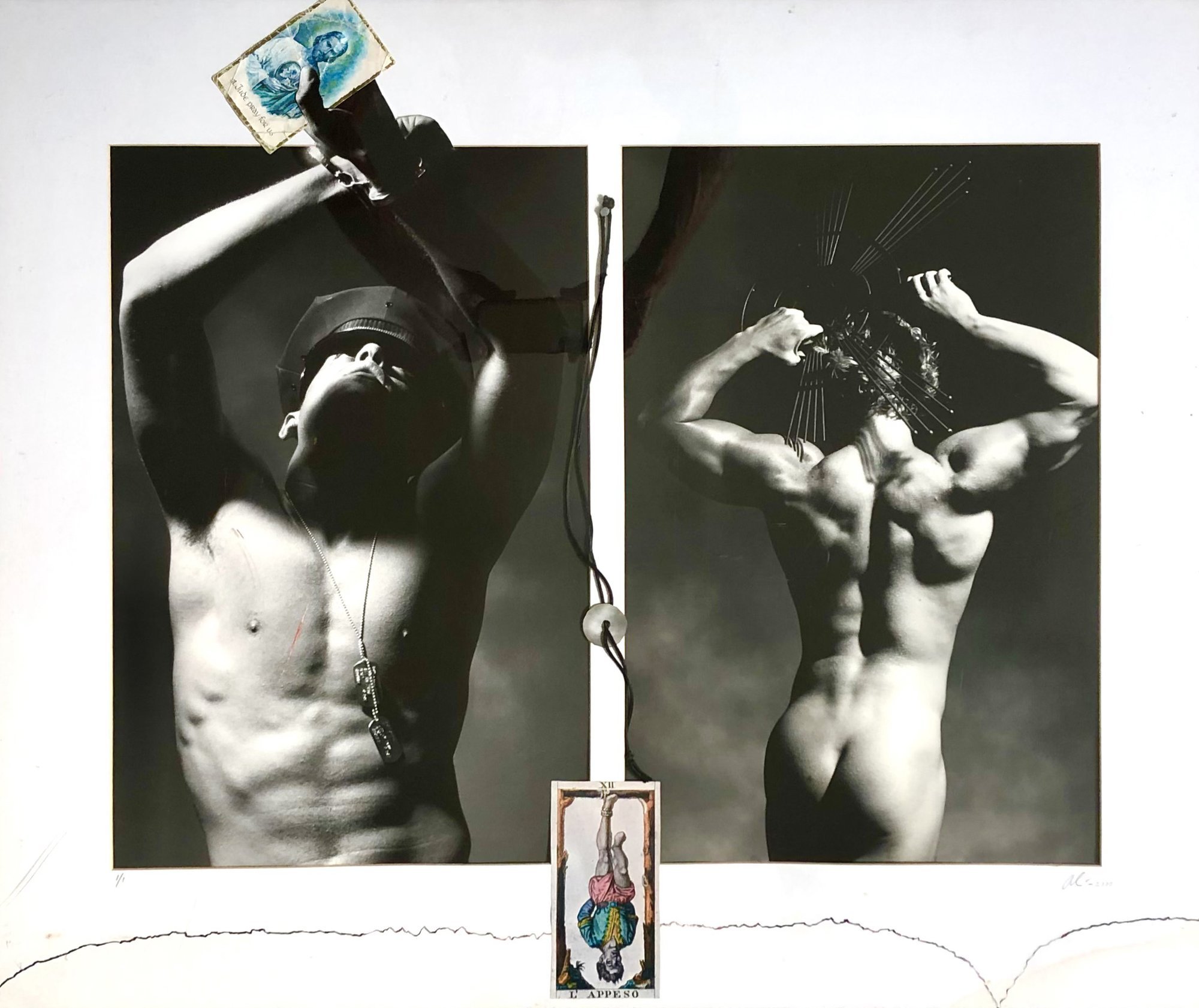
Carni-val 04, 1990
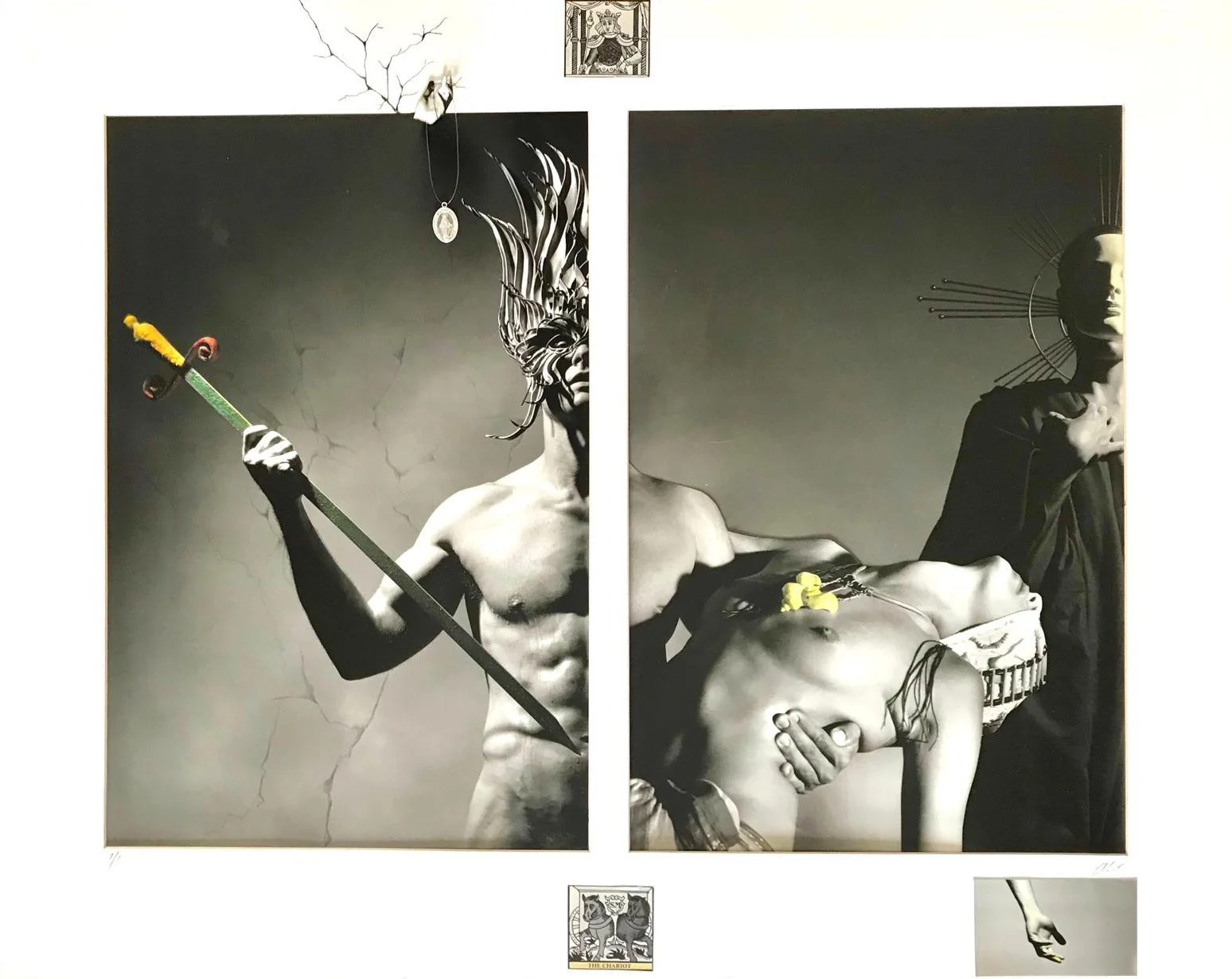
Carni-val 05, 1990
06 · THE STUDIO
Eros of Dreams
1993 · black and white
The last room is a dream. Horns, masks, statues and veils share the frame with men and women who seem to move through it in their sleep. This is what Ali calls erotic surrealism: desire staged as myth, at the point where the body turns into image.
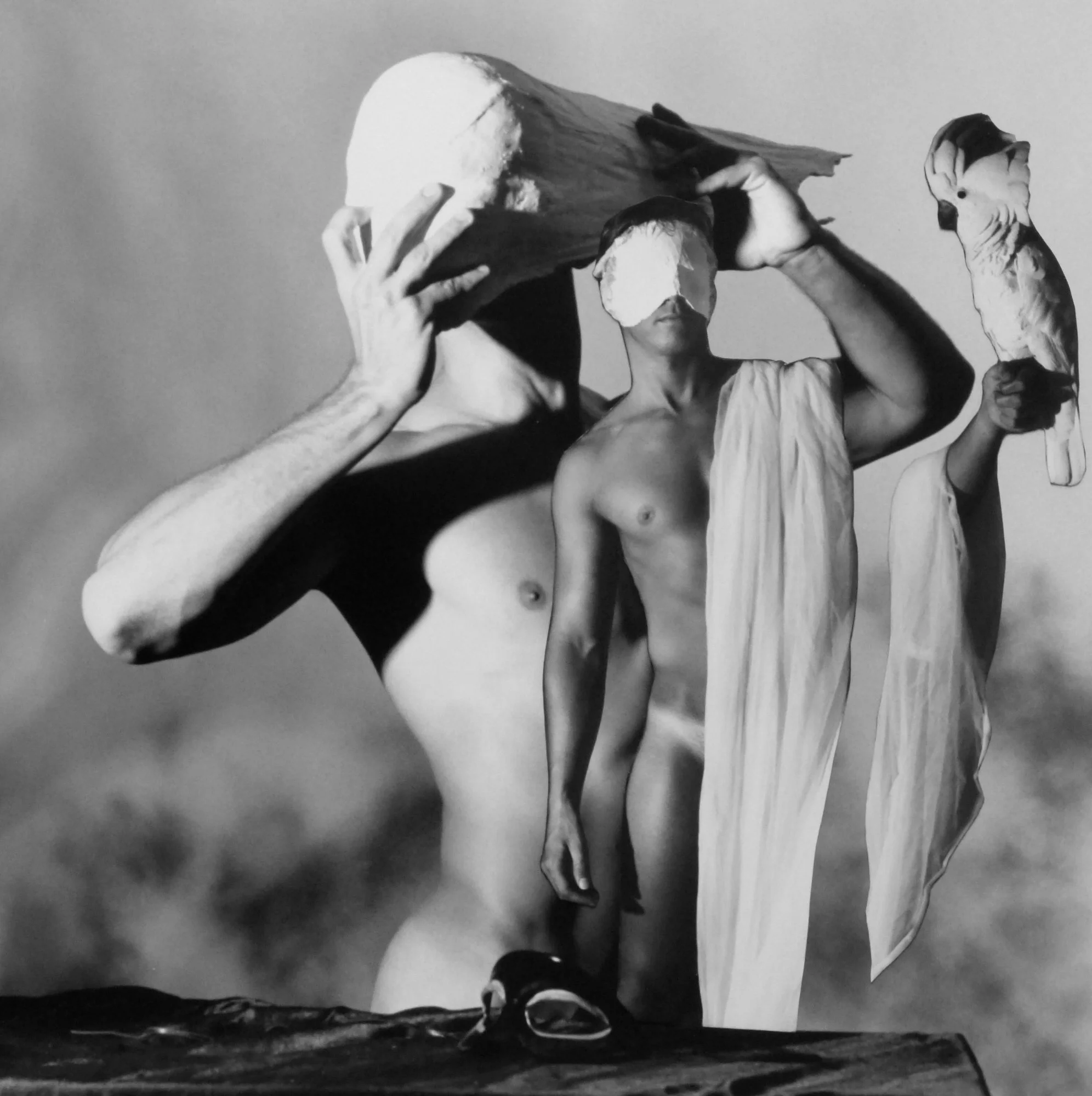
Eros of Dreams 01, 1993
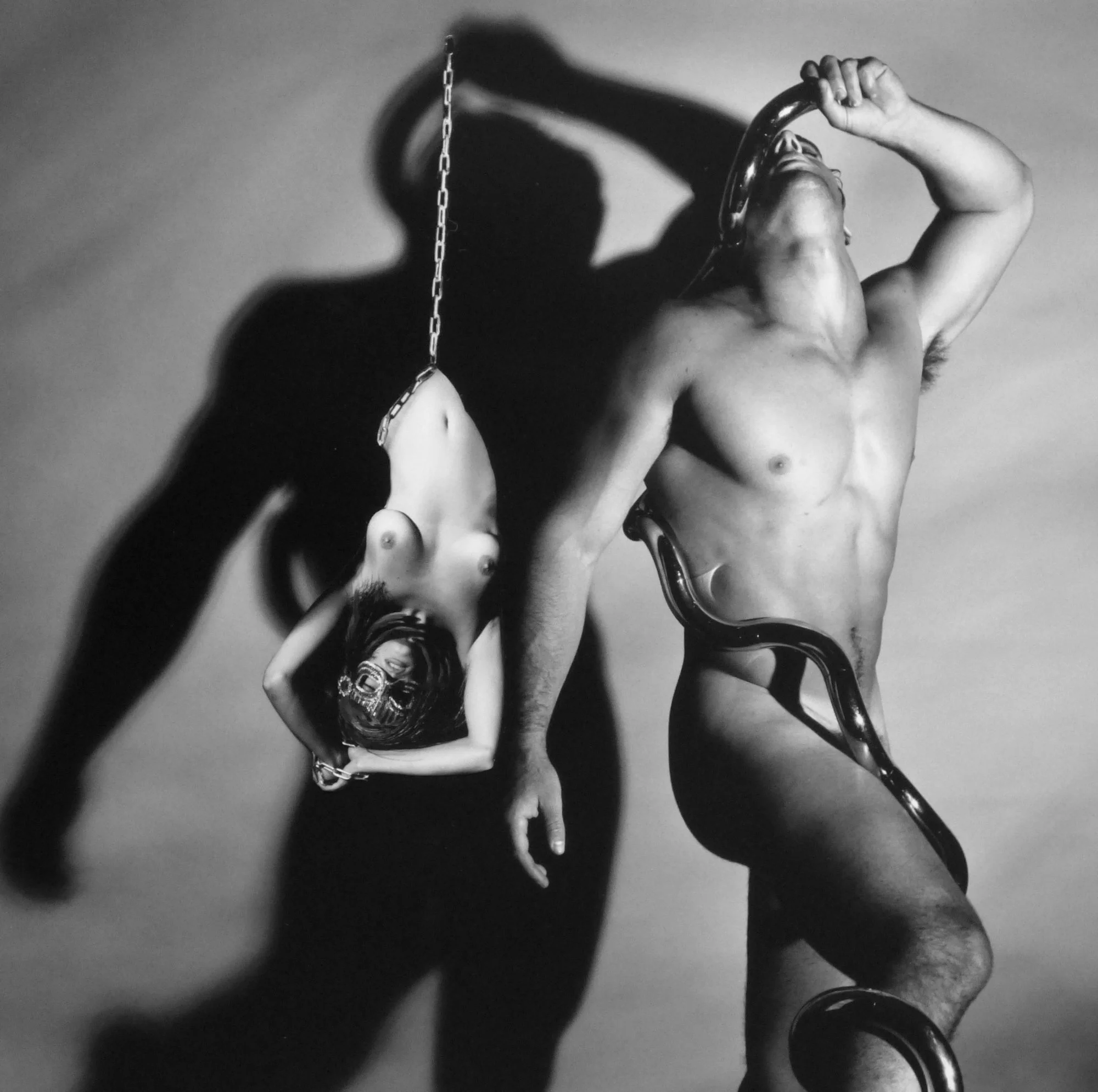
Eros of Dreams 02, 1993
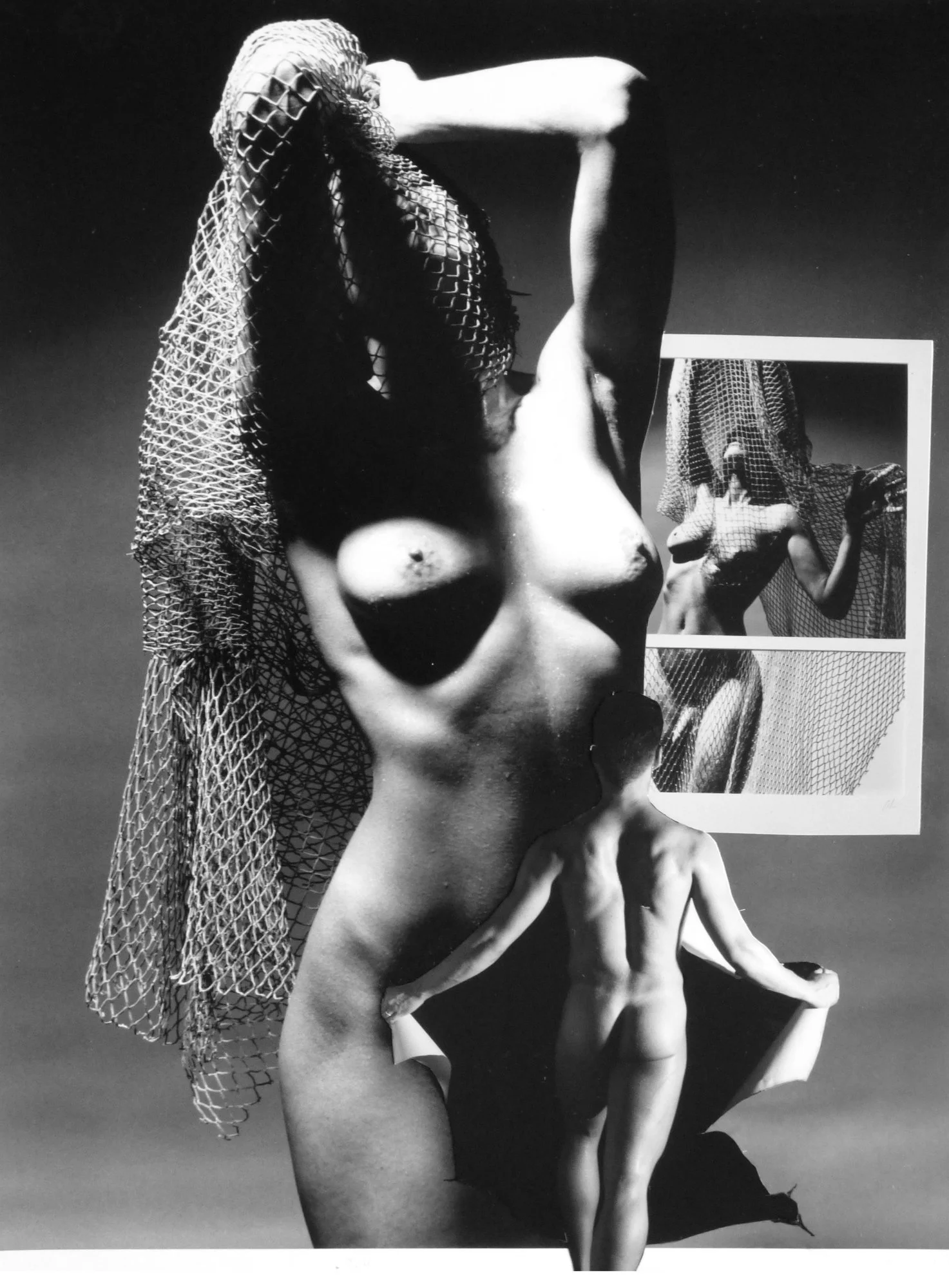
Eros of Dreams 04, 1993
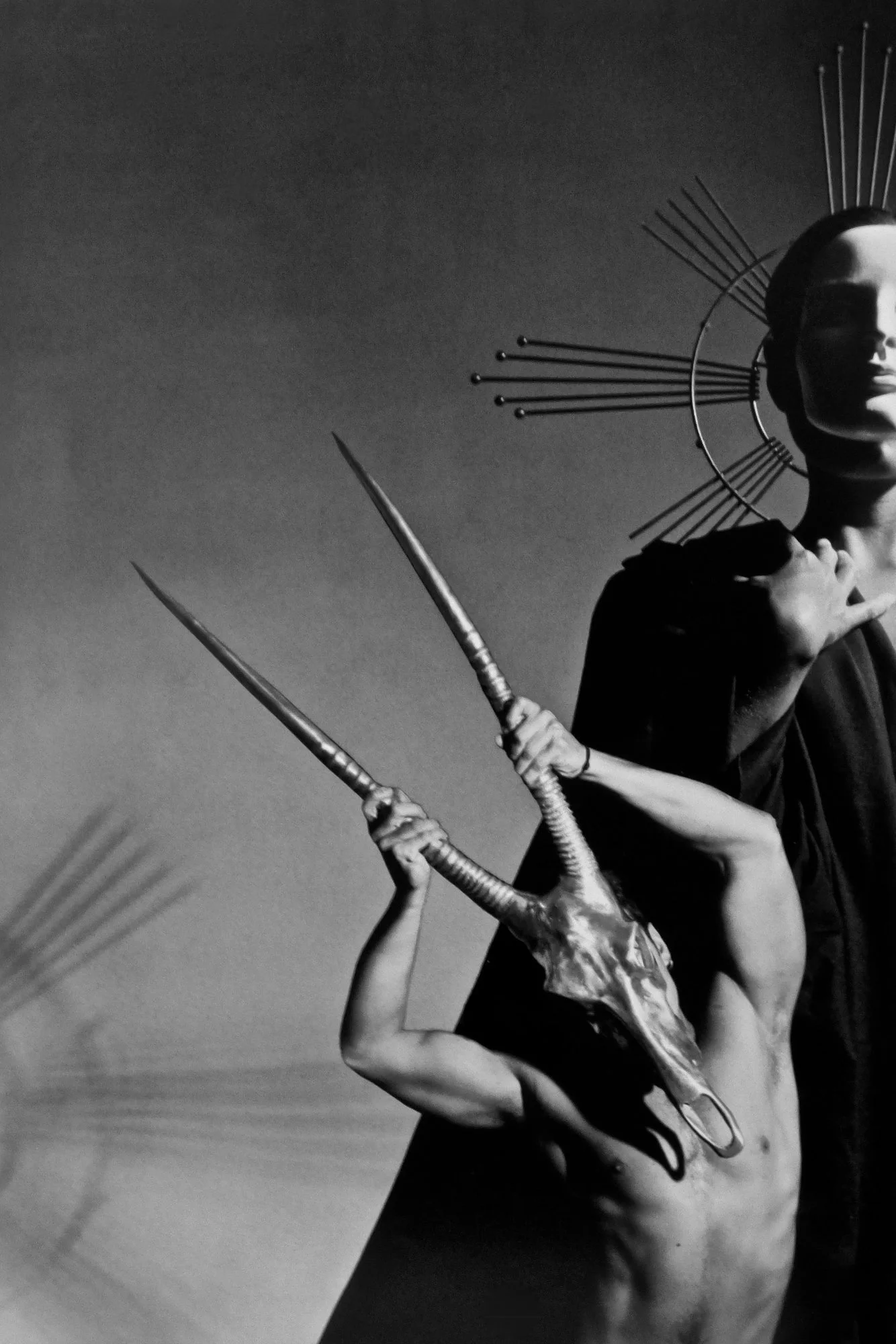
Eros of Dreams 05, 1993
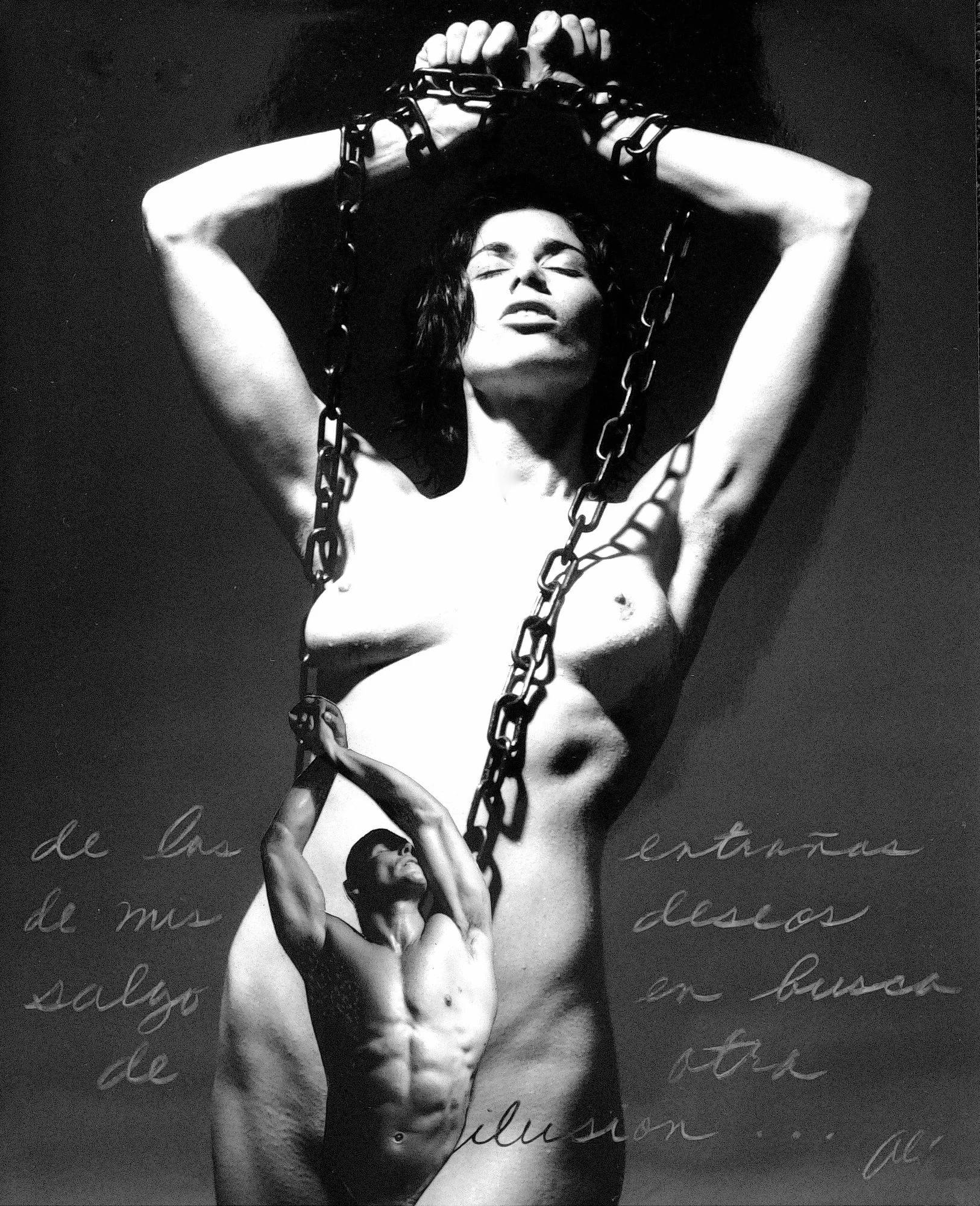
Eros of Dreams 06, 1993
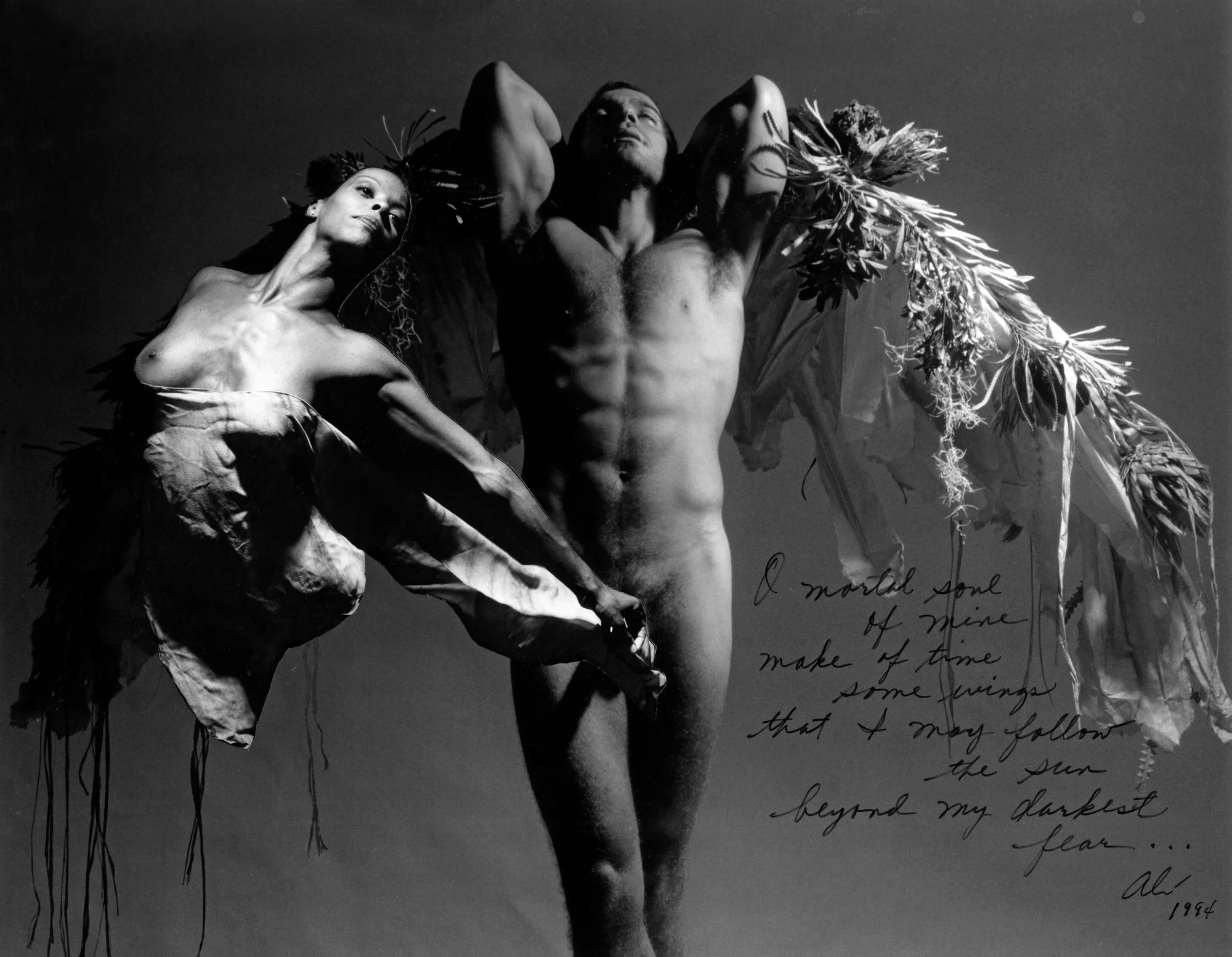
Eros of Dreams 07, "O mortal soul of mine...", signed 1994
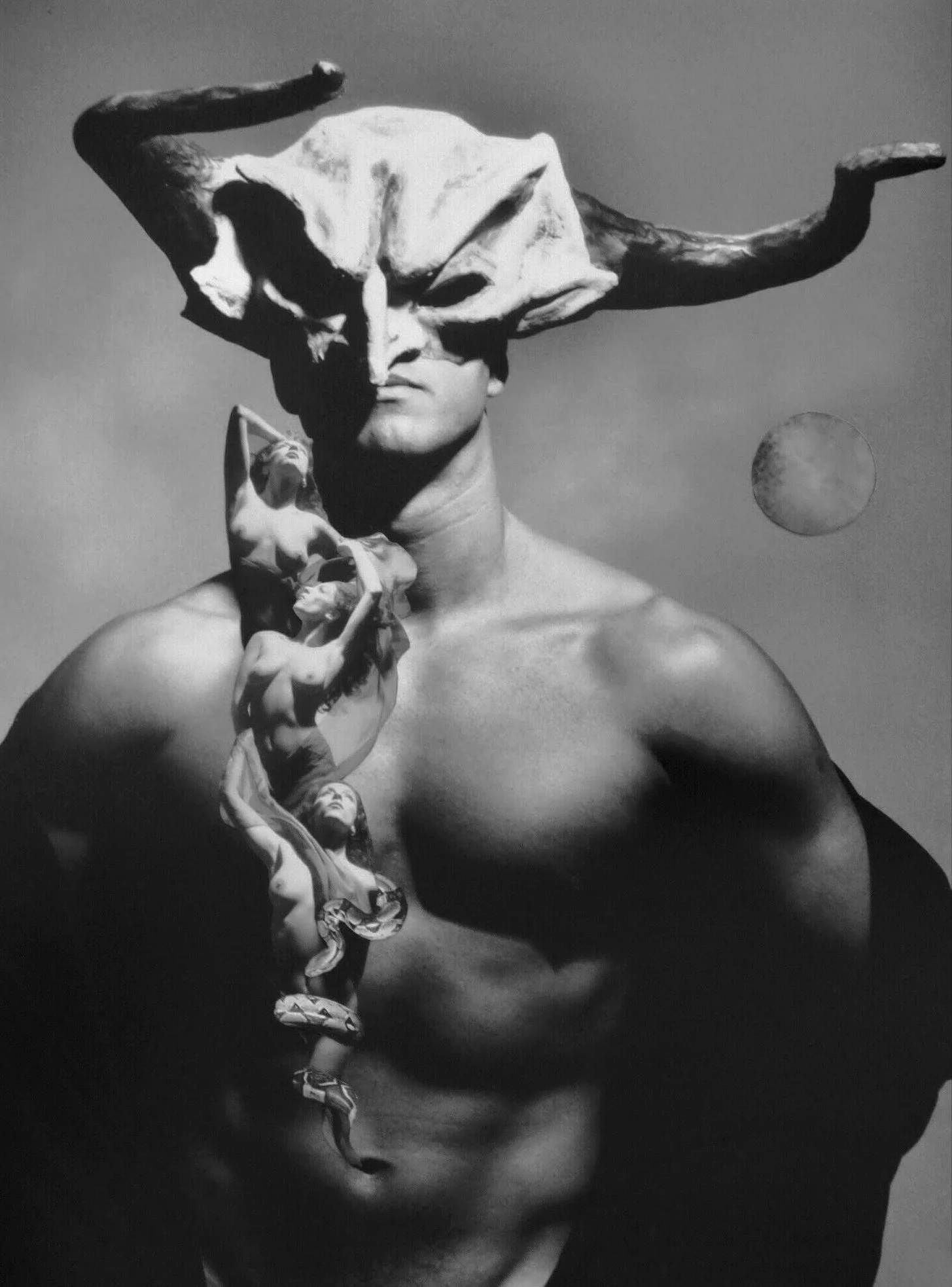
Horned mask with figurine, 1993
CURATORIAL ESSAY
Between the studio and the street
This exhibition is based on Ali Miranda: Beyond Photography and Homoculture, the online solo exhibition SoFLaFoto curated for the artist in 2023 within Picturing Queerness in the Americas. The platform that hosted that show has since closed, and the exhibition went with it. This revisit rebuilds it from the same body of work, held in SoFLaFoto’s artists’ archive, and puts at its centre what the photographs most plainly are: a celebration of a community that cast itself as its own stars, made by a photographer who belonged to it.
Born Jorge Miranda in Havana in 1954, Ali left Cuba with his family in the early 1960s and grew up in Miami. He trained in fine arts in San Francisco and New York and then came home. Photography began as a job before it became a vocation: “There was only one job available on my ‘heart-felt’ bulletin board at that time,” he recalls, “it was photography!” After years of fashion and commercial work for magazines and advertising agencies, he opened his own studio in South Beach in 1987. He describes himself simply as an art photographer, and he calls the work he made there “erotic surrealism.”
The exhibition opens in the street. In South Beach Drag Queen Scene, performers pose in groups, in colour and in daylight: around a pink pylon, at a lifeguard stand, in feathered costume in a fountain, piled into a red convertible. No one is caught unawares. They arrange themselves for the camera, in public and on their own terms, and the pictures keep a record of how this community chose to be seen.
Starlettes are saying: “Don’t say sandwich to me!” follows that self-invention into the everyday life of the street. Don’t Say Sandwich To Me was John Kroll’s restaurant on Washington Avenue at 14th Street in Miami Beach [years open]. As Ali remembers it, it stayed open around the clock, as many places in South Beach did then. Ali designed its menus, and their covers carried his portraits of drag performers, each billed as a star: Patty Cakes, Henrietta Robinson, Kittie Meow, Varla, Adora, Electra, Tiny, Calina, Fifi, Rafaela, Jackie O, Paloma and Divina. The menus were printed and used in the restaurant. Paired here with the portraits they were made from, as SoFLaFoto first presented them in 2023, they show a photograph leaving the studio to become an everyday object, and the performers’ names circulating through the city as names worth knowing. Several of the same performers appear in the street photographs [Ali to identify who, and in which images].
At night the setting moves indoors. Miami Gay Scene, four black-and-white flash photographs made at La Escuelita [year], shows the same world off the street: on a staircase, in the crowd of a club, around a dinner table. With Warsaw, La Escuelita was one of the venues where Ali photographed the scene, and like most of the places in these pictures it has since closed.
The second half of the exhibition moves into the studio, where desire is staged rather than recorded. Male Erotica (1990) treats the male nude in black and white, lit for form, texture and skin, within a line of studio photography that runs from George Platt Lynes to Robert Mapplethorpe. Carni-val (1990) breaks with that classicism. Its diptych photomontages join bodies with Catholic and tarot imagery, masks and ornaments into small fables. Eros of Dreams (1993) goes furthest into fantasy, setting male and female figures among sculpture and props in scenes closer to theatre than to documentation. One prop, a halo of rods, passes between all three series, as if the studio were a single continuous workshop. Many of Ali’s sitters were found in the bars, clubs, parties and beaches of Miami Beach, and in front of his camera, as on the street, the body becomes a means of performance.
Exile is not the subject of these photographs, yet they come from a child of exile who found a chosen community in Miami Beach, and the self-invention his sitters perform echoes a city remade by people who had to begin again. The photographs were also made in the years when AIDS was devastating gay communities in Miami Beach, as elsewhere. Seen from 2026, they keep faces, names and gestures that the city has otherwise lost. What was made as celebration now also works as an archive: personal, partial, and made from within.
The exhibition’s title points to that double life. Ali Miranda’s photographs are images of desire made by an artist inside the world he pictured, and documents of a homoculture that official archives rarely kept. Between the studio and the street, his work shows how a community pictures itself when it is also the one holding the camera, and, as the fate of the first exhibition shows, how easily such records can disappear.
William Riera
Curator, South Florida Latin American Photography Forum (SoFLaFoto)
THE ARTIST
Ali Miranda
Art photographer · born Jorge Miranda, Havana, 1954 · lives in Miami
Ali Miranda (born Jorge Miranda, Havana, Cuba, 1954) is an art photographer based in Miami. He left Cuba with his family in the early 1960s and grew up in Miami. He earned a BFA from the Academy of Art College in San Francisco and studied at the School of Visual Arts in New York before returning to Miami. After working in fashion and commercial photography for magazines and advertising agencies, he opened his own studio in South Beach in 1987, where he developed what he calls “erotic surrealism”: staged photographs and photomontages of the human body. Through the 1990s he also photographed Miami Beach’s drag performers and nightlife, including the menus he designed for Don’t Say Sandwich To Me, John Kroll’s restaurant on Washington Avenue, with his portraits of drag performers on the covers. Today he photographs everyday life: the people and places he comes across in the street. In his contemporary practice, Miranda shifts fluidly between straight documentary street photography, conceptual image manipulation, and personal archives. His work has been featured in regional and international exhibitions, exploring themes of identity, physical form, and South Florida cultural memory.
Selected exhibitions, collections and publications: [to be supplied by the artist]
About this exhibition
This exhibition is based on the online solo exhibition SoFLaFoto curated for Ali Miranda in 2023, Ali Miranda: Beyond Photography and Homoculture (June 2–July 30, 2023), within Picturing Queerness in the Americas. The original platform has closed; this page is its permanent home.
Curator: William Riera. Photographs: © Ali Miranda. Menu-and-portrait diptychs assembled by SoFLaFoto for the 2023 exhibition. Captions, dates and technical details are being confirmed with the artist.
Presented by the South Florida Latin American Photography Forum (SoFLaFoto), a 501(c)(3) nonprofit.